Sunday, September 26, 2010

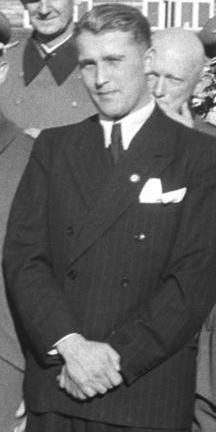
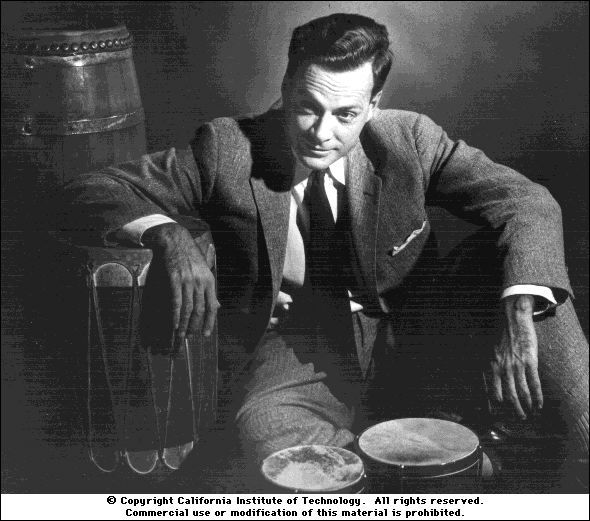
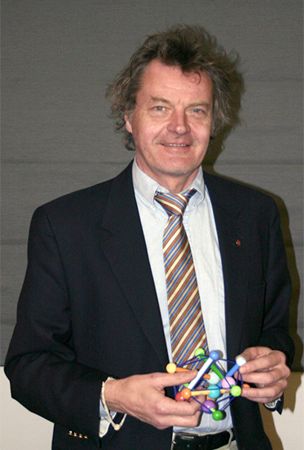
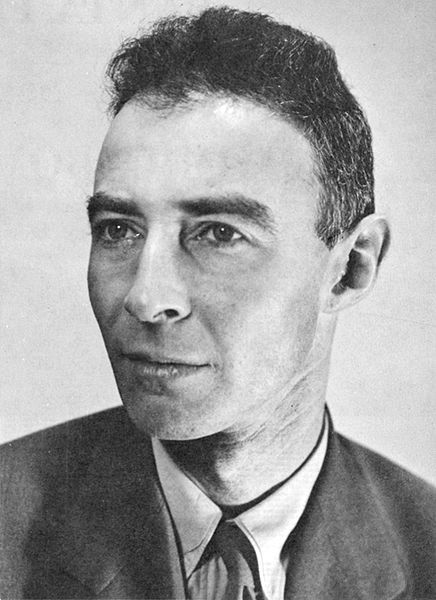
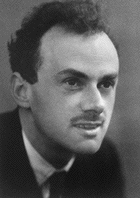
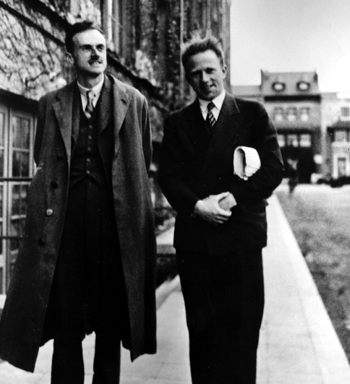
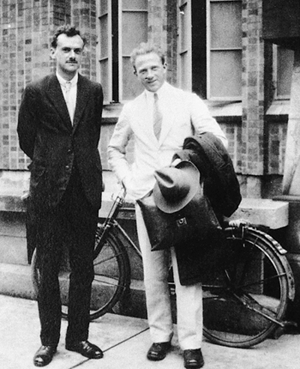
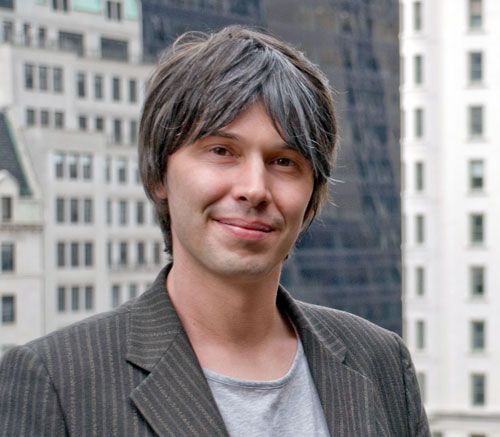
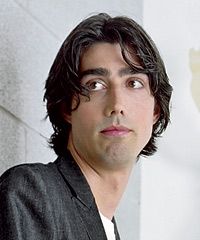
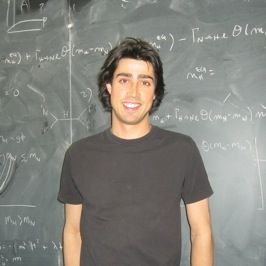
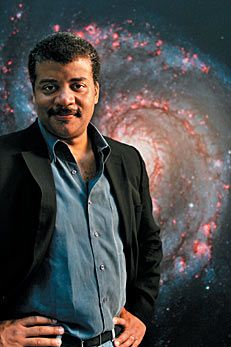
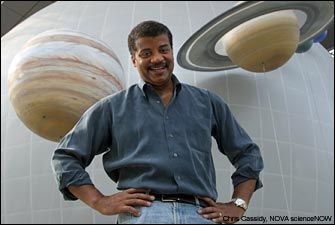
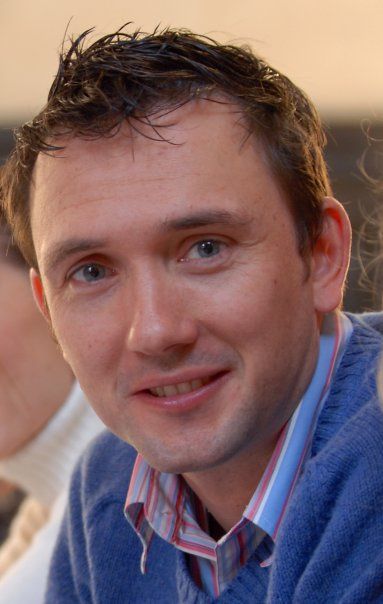
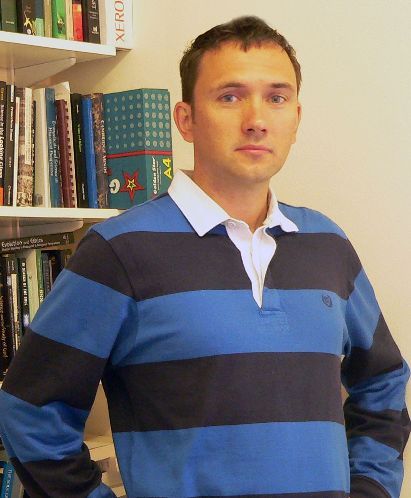
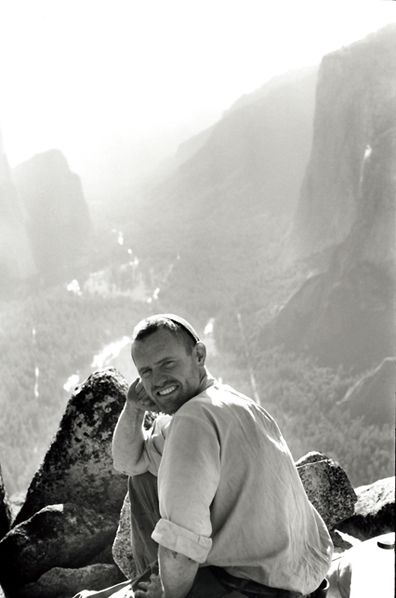
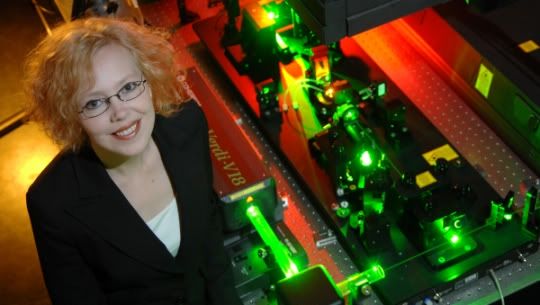
VOTE Most Attractive Male Physicist

OK, we had quite a bit of commotion and "fun" with our poll on the Most Attractive Female Physicist. Now comes the men. I hope that it will be as equally "offensive" to some people that we are simply objectifying these people for their looks and nothing else! :)

The nominees here were based on the names submitted during the nomination period by you. I've used the pictures from the links submitted, and in cases where there were no links, I tried to find pictures available off the web. As before, please contact me if any of the pictures are copyrighted and you want it removed.

Unlike the women's poll, the ethnic range of the nominees are rather limited. Oh well, this is what we get. So cast your vote, and don't stuff the ballot! It means that please try to cast your vote only ONCE even though there is no way for me to check.

Without further delay, here are the men, in no particular order!

1. Jacob Linder


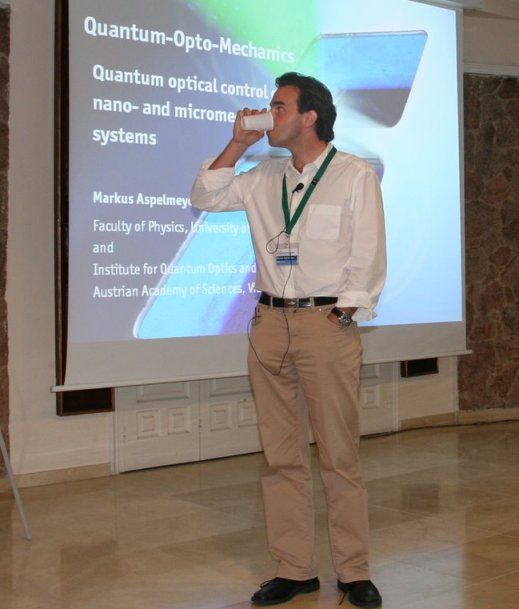
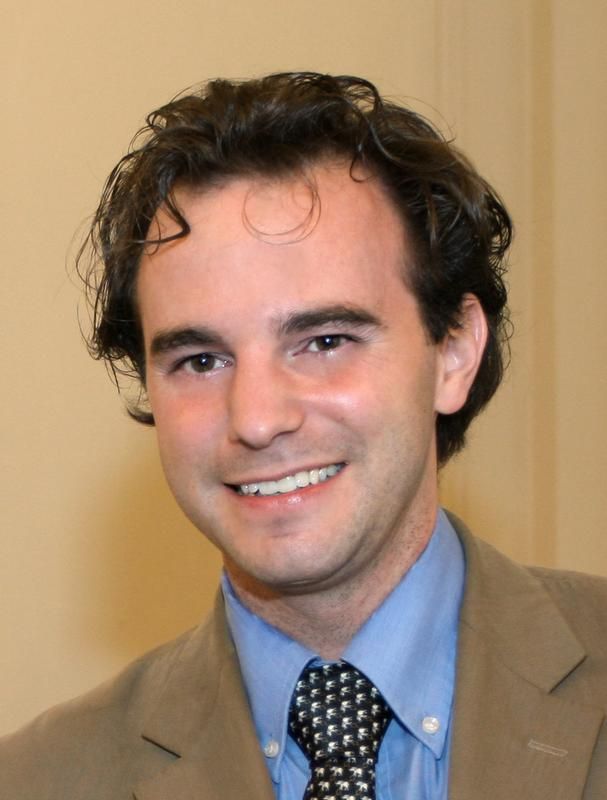
2. Markus Aspelmeyer


3. Isaac Newton


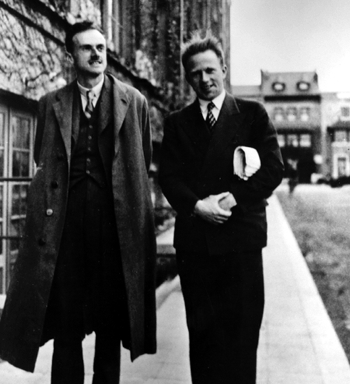
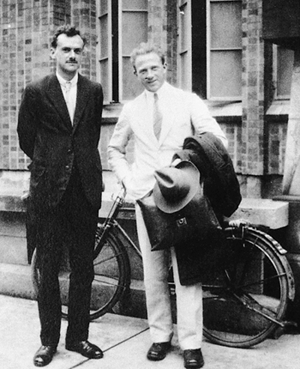
4. Werner Heisenberg


5. Wernher von Braun


6. Richard Feynman


7. Jim Gimzewski


8. Jonas Braasch


9. Robert Oppenheimer


10 Paul Dirac


11. Brian Cox


12. Mark Jackson


13. Neil deGrasse Tyson


14. Hannes Alfven


15 Ard Louis
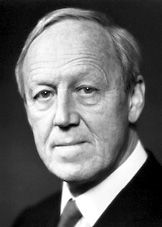

16 Henry Kendall


17 Zachary Keanne


Zz.

Saturday, September 25, 2010

Another Physics Nobel Laureate Joins The Obama Administration

Nobel Laureate Carl Wieman will be joining the Obama Administration as the Associate Director of Science in the White House Office of Science and Technology.

One may not like the issues and the politics that these appointees may have, but there is very little doubt that many of the science appointees are extremely knowledgeable and know the subject area that they are hired for.

Zz.

Final Day To Cast Your Vote

This is the final day to cast your vote for the Most Attractive Female Physicist. After this, the men will be next. Let's see if they will garner their own controversies as the women did.

Zz.

Friday, September 24, 2010

Testing General Relativity On Earth

Hey, remember way back in 2008 when I highlighted a paper that makes a more stringent time-keeping device using optical transition of ions? One of the important implication of that paper that I quote was that the time resolution is now good enough that one could start to see effects of GR by just by changing in altitude by 1 cm!

Well, such a challenge seldom go untested. The same NIST group that made that time-keeping advancement has now reported a test of GR using such a device (like open for free only for a limited time)[1]

General relativity states that time speeds up for objects as gravity weakens. To demonstrate this, Chou and his colleagues raised one optical clock 33 centimetres above another. The slightly lower gravity at that height meant that compared with the reference clock, the raised clock ticked with a fractional boost in frequency of 4 × 10–17, equivalent to a gain of 90 billionths of a second over 79 years.

To demonstrate special relativity, which says that time slows down for moving objects, the researchers jolted the single atom in their optical clock so that it oscillated at relative speeds of less than 10 metres per second, or 36 kilometres per hour. This time, the clock's ticks seemed to drop by a fractional frequency of almost 6 × 10–16.
Amazing work!

Zz.

[1] C.W. Chou et al., Science v.329, p.1630 (2010).

Wednesday, September 22, 2010

Quantum Quackery

I have written so many blog entry on such quantum quakery, I don't think my fingers can take it anymore. Luckily, this time, Lawrence Krauss tackles this issue by bring to task several quackeries that uses quantum mechanics in vain. For example, the frequent abuse of quantum entanglement gets directly addressed in this question/answer:

Q: But isn't everything really connected? Doesn't the quantum world pervade everything that we see around us?

A: Of course it does. So does classical physics. The quantum world does pervade everything around us, but as Richard Feynman liked to say, "Scientific creativity is imagination in a straitjacket." Not everything is possible. That's what makes the world so interesting. It is true that quantum mechanics is extremely strange, and on extremely small scales for short times, all sorts of weird things happen. And in fact we can make weird quantum phenomena happen. But what quantum mechanics doesn't change about the universe is, if you want to change things, you still have to do something. You can't change the world by thinking about it.

We are connected to the world by many things: by light and sound and heat. We do, at subatomic scale, behave quantum mechanically. But we behave like classical objects for a reason: We're big, we have lots of particles, they interact. All the weirdness of quantum mechanics gets washed out on the scale that we can experience. That's why we experience a classical world.

The weirdness of quantum mechanics is reserved for either very specially prepared configurations in the laboratory, or scales that are so small that quantum-mechanical effects are significant.

We're also connected to the universe by gravity, and we're connected to the planets by gravity. But that doesn't mean that astrology is true. With quantum mechanics, there's a notion that observers affect the things that they're observing. That's not always true, but it's often true. That's one of the very strange properties of quantum mechanics. Therefore people get the notion that there's no objective reality, and that you can literally impact on the external world just by doing things internally. That's not the case. If you want to affect something in the external world, you have to do something to it. You can't just hope for the best. You can't bring good things to you by thinking about them.

The quantum mechanical correlations, the spooky action at a distance that quantum mechanics brings up, is true only for very specially prepared systems that are isolated from the rest of the world, completely. And we are certainly not isolated from the rest of the world. We're bombarded by many things every second of the day, and a result, we're not specially prepared quantum mechanical systems, nor can we exert weird quantum powers over other objects.

You'll notice that some of the things that Krauss talks about has a ring of familiarity if you have read my blog entry on why quantum mechanics is so difficult for the general public, and why it is susceptible to being abused.

One would hope that people would read this article and stop being taken in by all of these quackeries. Would Oprah invite Krauss to clarify all the misinformation that she helped spread when she touted "The Secret" on her show? I highly doubt it.

Zz.

Tuesday, September 21, 2010

"Find Your Inner Scientist"

That's what Lawrence Krauss told students at a Graduate Student conference.

"We have to be diligent. There are many forces in society working on behalf of ignorance," Krauss said.

He also hoped that attendees would find their inner scientist. Part of his goal was to raise awareness of the issues and provide people with the tools to counter non-science in their own discussions.

As graduate students, we are almost "programmed" to keep our focus on doing our research work. Most of the time, we just don't have the time nor the inclination to figure out society's odd behavior. So having issues like this being presented to these students now and then would serve as a wake-up call, and give then a dose of reality of what they will be facing when they graduate. It isn't just about the science, especially when the public has been shown to not care about facts in many instances.

Zz.

Monday, September 20, 2010

The Physics of Cheating in Baseball

{Don't miss casting your vote for the most attractive female physicist}

No, this is not about steroid use, which we've already looked into. This manuscript is more on the mechanical/material aspect of cheating in baseball, namely (i) the use of corked bats, (ii) is the ball livelier than before, and (iii) would storing the ball in a controlled environment makes a difference.

Abstract: Three separate questions of relevance to Major League Baseball are investigated from a physics perspective. First, can a baseball be hit farther with a corked bat? Second, is there evidence that the baseball is more lively today than in earlier years? Third, can storing baseballs in a temperature- or humidity-controlled environment significantly affect home run production? Each of these questions is subjected to a physics analysis, including an experiment, an interpretation of the data, and a definitive answer. The answers to the three questions are no, no, and yes.

Rather interesting reading.

Zz.

Sunday, September 19, 2010

Field Guide To Subatomic Particle

{Don't miss casting your vote for the most attractive female physicist}

This looks to be a rather useful guide to newbies on subatomic particles. In a handwaving way, it gives you the necessary simple picture of elementary particles.

Zz.

Saturday, September 18, 2010

VOTE For The Most Attractive Female Physicist

OK, let's see how this goes.

We will start with the ladies first. I've decided to include ALL the submitted nominees in the poll. You have only ONE vote, and you have until the end of Sept. 26 to cast your vote.

{EDIT: To all those who are "offended" by this poll, stay tuned, because you will be, hopefully, equally offended when the poll for the most attractive male physicist comes up after this one is done. If you didn't follow this from the beginning and noticed that I call this exercise shallow and superficial, then I have nothing else to say.}

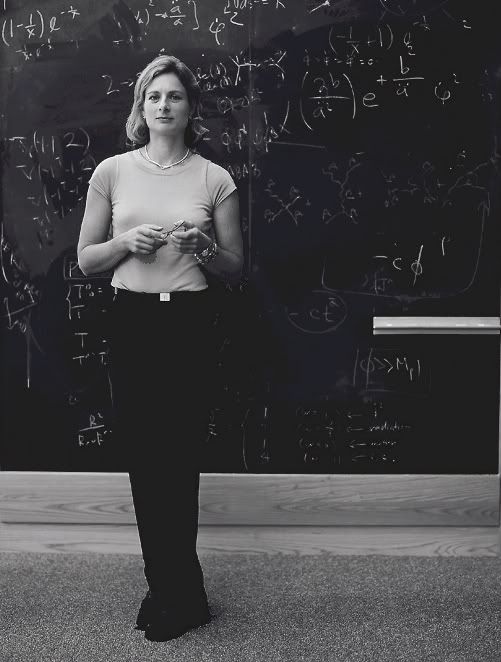
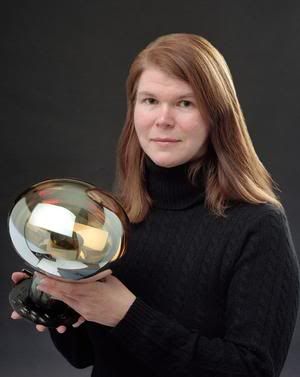
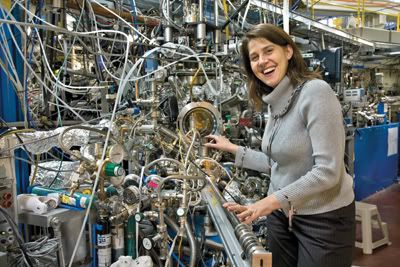
This is not going to be easy. We have 13 nominations, and I have to say, you people did GOOD! The nominees span a wide range of ethnic and racial profile, for women who have a tougher time in this field, it is heartening to see so many. I had to admit that I had a bit of an apprehension that we won't be getting many women nominations, but you proved me wrong. Well done!

To help with your voting, here are pictures that were either submitted, or what I could find on the web/public domain. You are welcome to do your own search to supplement the pictures here. IF ANY OF THESE PICTURES ARE COPYRIGHTED AND YOU WOULD LIKE IT TO BE REMOVED, PLEASE CONTACT ME or leave a comment. Please use the voting app in the side bar of this blog.

In no particular order, the nominees for the most attractive female physicist are:

1. Elisabeth Rieper


2. Anna Wilson

3. Amy Mainzer


4. Maria Goeppert Mayer


5. Kimberley Hall


6. Lisa Randall


7. Firouzeh Sabri


8. Deborah Berebichez

Edit: Ms. Berebichez contacted me to remove a copyrighted picture, but has graciously sent me 3 more to replace that one. I hope some of you are not regretting that you didn't cast your vote for her now.


9. Madhuri Kaul


10 Janet Conrad


11. Kim-Vy Tran


12. Sarah Kavassalis


13. Allesandra Lanzara

These are all very attractive women. They are all winners in my book.

Zz.

Friday, September 17, 2010

Politics And Ignorance Make For A Bad Dating Service

It is often unfair to make over-generalized statement about a particular political/social persuasion. But when things like this keep coming up, it is hard to look away. It also reinforced what I've said repeatedly, and it is an anecdotal evidence for the study that just got published recently.

We have a Tea Party candidate here that won a nomination for the Republican party, and who is going around and denouncing the present US government. However, do you want this person to be in the Senate? It appears that she not only is ignorant of science, but also is does not care of showing off such ignorance. Her denial about Carbon 14 dating is now making its rounds.

Holy crap!

Kathy Griffin once came up with a phrase that best describe such a person : They are proud of their aggressive ignorance.

Yet, there are people who apparently can overlook a candidate that not only have very little knowledge of what they talk about, but also does not mind propagating false information! Again, this is another clear example that when the public is made to choose between facts and beliefs or political persuasion, facts often lose!

Zz.

Thursday, September 16, 2010

Nomination Closed For "Most Attractive Physicist Contest"

The nominations for Most Attractive Physicist contest is closed. I'm glad to see so many nominations. Without even knowing who the winner is for each gender, I think this is already a big success, because I can see many good-looking physicists that got nominated.

Anyway, give me a couple of days or so to get the first voting online. I'm as curious as you are to see who will end up on top.

Zz.

The Public Weighs Values More Than Facts

A long time ago, in a galaxy far, far away, I wrote a piece titled "You need to be Perky, Shallow, and Superficial" when communicating with the public (and politicians). I didn't come up with that phrase. It was a paraphrase from a speech I heard given by Pat Dahmer of the DOE when she talked about communicating with politicians.

While that was a glib statement, it has a lot of truth in it. I've cited examples in that blog entry, and in many of my blog entries on here since then, of situations when the public simply put more emphasis on bells and whistles, and ignored facts and scientific data when they decide on something. When that happens, style will trump over substance. You can easily persuade the masses not with valid facts, but with how persuasive you can present your position. An engaging speaker, a jaw-dropping multimedia presentation, etc. can easily convince a large group of people to your side, regardless of whether you actually have something valid to say.

Well now, a new study has clearly shown just how much the public don't really care about facts. Charles Day's blog in PhysicsToday highlights a new study that shows that the public put more emphasis on their values, even when it contradicts with facts.

Indeed, scientists are so used to giving up cherished theories in the face of contradictory experiments that they sometimes forget that nonscientists are less deferential toward facts. A study published recently in the Journal of Risk Research underlines that difference.

As Day wrote in the blog, I'm not surprised either that the public doesn't put as much emphasis on facts as scientists do. And his statement that scientists are more likely to give up cherished theories (or ideologies) than non-scientists when faced with contradictory experiments and facts is consistent with what Dan Koshland had mentioned earlier that "... science is more receptive to non-conformity than any other segment of our society".

So I think when the next time some public figures rant about science and how it is inflexible, rigid, upholding the status quo, doesn't want to change, etc.. etc., we now have ample evidence to the contrary, and that it is the PUBLIC/non-scientists as a whole that are more susceptible to upholding their beliefs despite being given evidence to the contrary.

Edit: I found a place that has a copy of the manuscipt. Click here. The exact reference to the published paper is D.M. Khan et al., Journal of Risk Research 10 September 2010 (I couldn't find the volume and page number).

Zz.

Ref: 
Cultural Cognition of Scientific Consensus
Journal of Risk Research, Vol. 14, pp. 147-74, 2011
Yale Law School, Public Law Working Paper No. 205