Well, not in the way you think.
I recently found this video of an appearance of astronaut Scott Kelly on The Late Show with Stephen Colbert. During this segment, he talked about the fact that when he went to sleep on the Space Station and closed his eyes, he occasionally detected flashes of light. He attributed it to the cosmic radiation passing through his body, and his eyes in particular.
Check out the video at minute 3:30
My first inclination is to say that this is similar to how we detect neutrinos, i.e. the radiation particles interact with the medium in his yes, either the vitreous or the medium that makes up the lens, and this interaction causes the ejection of relativistic electron and subsequently, a Cerenkov radiation. The Cerenkov radiation is then detected by the eye.
Of course, there are other possibilities, such as the cosmic particle causes an excitation of an atom or molecules when they collided, and this then caused a light emission. But Scott Kelly mentioned that these flashes appeared like fireworks. So my guess here is that it is more of a very short cascade of events, and probably the Cerenkov light scenario.
This, BTW, is almost how we detect neutrinos, especially at Super Kamiokande and all the neutrino detectors around the world. Neutrinos come into the detector, and those that interact with the medium inside the detector (water, for example), cause the emission of relativistic electrons that move faster than the speed of light inside the medium. This creates the Cerenkov radiation, and typically, the light is blueish white. It's the same glow that you see if you look in a pool of fuel rods in a nuclear reactor.
So there! You can detect something with your eyes closed!
Zz.
Showing posts with label space travel. Show all posts
Showing posts with label space travel. Show all posts
Thursday, September 13, 2018

Sunday, July 12, 2015
Space Coffee
It's amazing how much physics and engineering go into just getting the ISS occupants to have their cup of Joe while on board the space station.
They should just open a Starbucks franchise up there. It would have been easier!
Zz.
They should just open a Starbucks franchise up there. It would have been easier!
Zz.
Tuesday, July 16, 2013
Zero Gravity Coffee Cup
This video is more about fluid mechanics in microgravity, but hey, coffee is important too, even in space! :)
Zz.
Zz.
Thursday, December 13, 2012
Is There Poop On The Moon?
I swear, those people at Minute Physics must have heard that I visited the Kennedy Space Center last week! How else do you explain this uncanny timing of them producing this video? :)
Zz.
Zz.
Tuesday, December 11, 2012
Kennedy Space Center
If you've followed this blog recently, you'll noticed that I missed a stretch of about 10 days with no posting. I was on vacation.
Still, my vacation had a "physics" component to it. As one of my stops, I visited the Kennedy Space Center in Cape Canaveral, Florida. I've never been to this place before, even though I've always wanted to go there especially during the Shuttle era. However, I never made it there till now, which I later found out, has its advantages. I will explain why that is so when we get to that point.
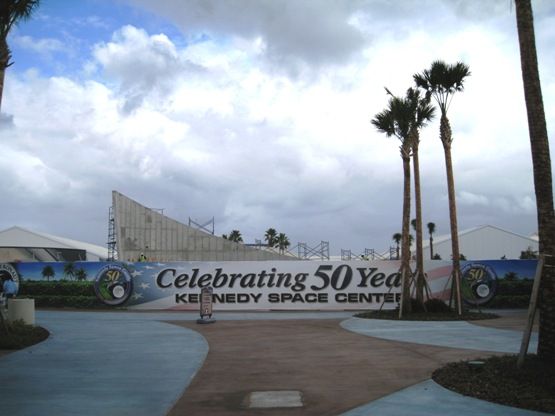
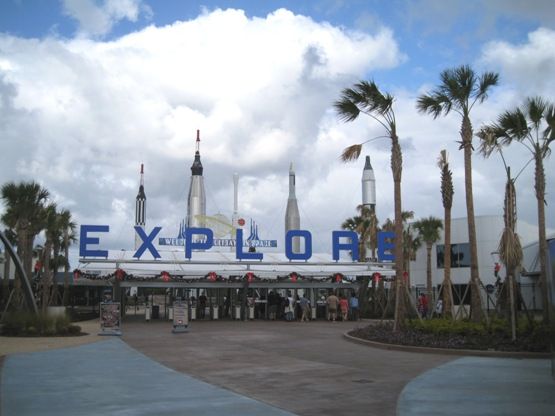
So this is the entrance to the visitor center. As you can see, there are constructions on new facilities that they are building to expand and enhance the visitor center.


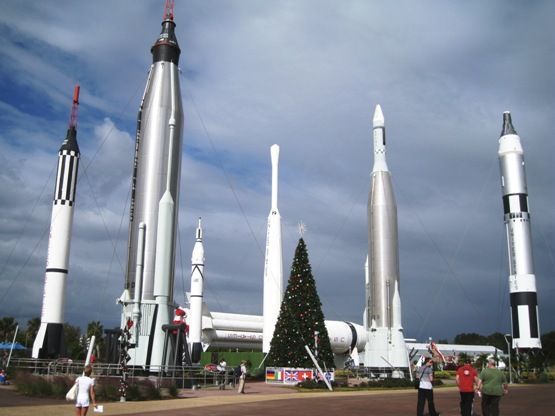
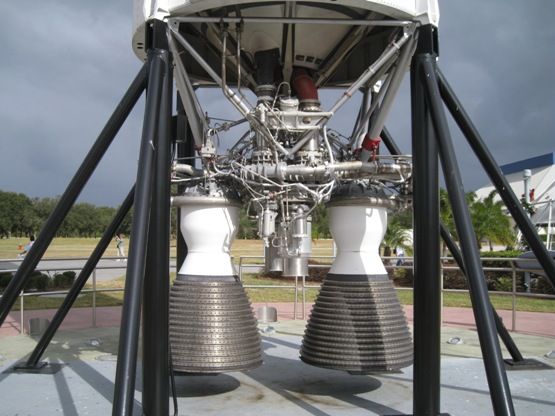
We made it to what I jokingly called the rocket graveyard. These cover the history of rocket propulsion that led to NASA sending satellites and manned space craft into space.


They had the bridge that used to connect the launch structure to the space module. So this is what the Apollo astronauts saw when they are walking into the capsule right before launch.

Here's what one of the capsules looks like. Man, was it tight!

I spent a bit of time looking around more of the visit center, but then took a tour that I signed up months ago. This is not your ordinary tour that they have running almost all day at the Space Center. This was a tour of the Launch Control Center. It appears that they started giving this tour about 2 months ago, and supposedly, they have not received any indication right now if it will go on after the New Year. This tour is only done once a day, and limited to less than 25 persons per tour. We were also not permitted to bring anything that we could not carry all the time, i.e. we were not allowed to put things down on the floor and walk away. This was beside the fact that we will be having 2 security escorts while in the building.
Now this is where coming here after the Shuttles had been retired was a plus. It turns out that they had never given the public access to the Launch Control Center (or what they refer to as the Firing Room) till now. In fact, most people working at the Kennedy Space Center have never been allowed to be in such a room. The reason why they are doing it now is because there are no more Shuttle launches. However, the room is still "operational", and it will be modified for NASA next program. That was the reason for all the restrictions and security.
Well, enough of that. Here are pictures that I took of the LCC. We arrived at the building and this was the lobby.

They have a few things on display in the lobby, including a very old console that, I think, was used during the Apollo program.


But what drew my eyes more was this wall of plaques of all the space launches that were done out of this building.

This includes the Apollo 11 mission,

and the first mission of the Space Shuttle

Each of the plaque had a launch date and the date it landed. However, two of the shuttle mission didn't have a "Landed" date, and those of course corresponded to the two tragic shuttle accidents.


If you look closely at where the "Landed" tag should have been, you'll notice that the wall showed a bit more wear than usual. It turns out that NASA employees rub their fingers at these locations when they walked pass them as a sign that these astronauts are always in their thoughts.
We were then taken into an elevator up to the LCC. I don't quite remember seeing the firing room on TV (I'm more familiar with the Command Center in Houston). But it was still an impressive room, and we got to see it from various locations.


This was the view out of the window from the LCC. You can see the shuttle launch pad in the distance, and also the 2-lane gravel path that the crawler took from the shuttle assembly building to the launch pad.

After a long visit to the LCC building, we then got back on our bus and got a tour of the grounds. First off is the shuttle launch pad. I can only imagine what it would look like if the shuttle is all set and primed to go. Of course, I've seen it on TV, but I'm sure it would have been significantly more impressive in person. I would love to know more about their cryogenic systems to produce all those liquid hydrogen and oxygen.


We were then driven around a new launch pad that they are building for the Orion program (did they get full funding for this? I must have missed it). Our tour guide was continually gushing over this to emphasize that NASA is not dead, and that the space program is back in operation and "we are back in business".


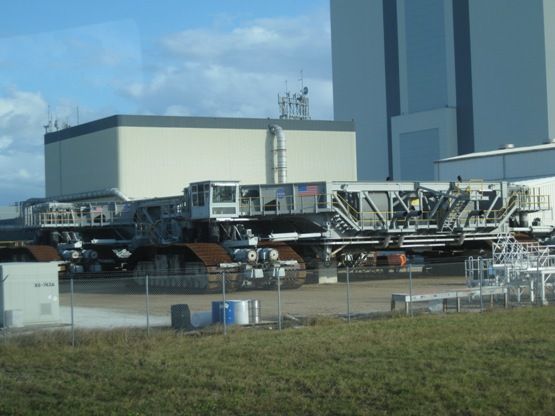
We also drove by the crawler, which is now sitting outdoors. If you don't know this, the crawler was the vehicle that brought the upright Space Shuttle (i.e. the orbiter, the external rocket, and the solid rocket boosters) from the assembly building to the launch pad. It literally crawled at about 1 mile per hour. While this may not have been that different than watching grass grows, I wouldn't have minded to see that either!

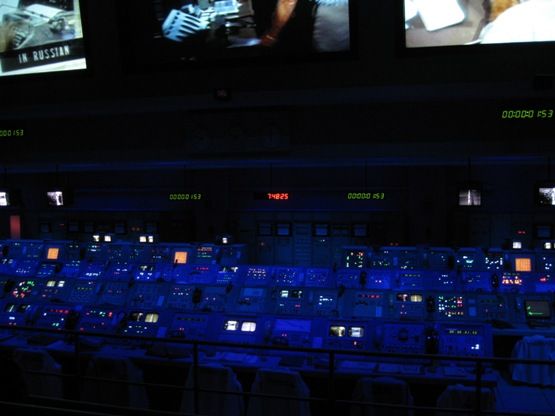
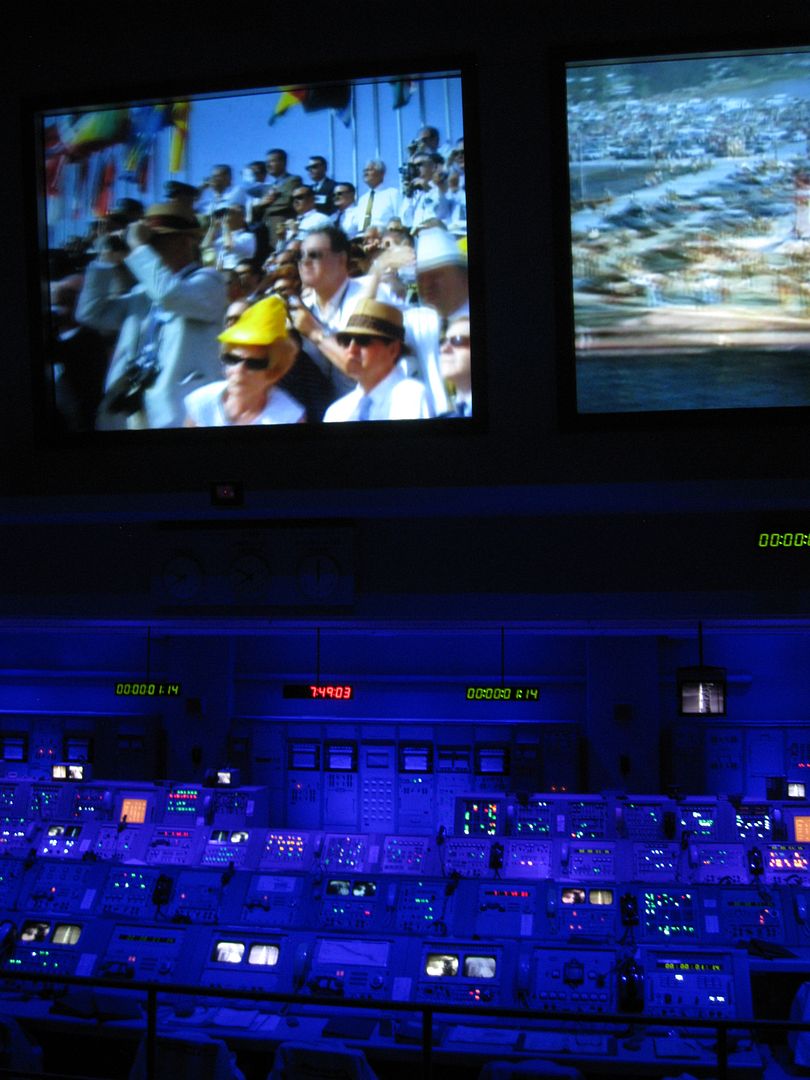
Our last stop was the Apollo experience. We were dropped off at a building and entered a room that simulated the firing of an Apollo rocket. The equipment in the room was authentic, and the audio and simulate was incredible because one could hear the windows rattled during take off.


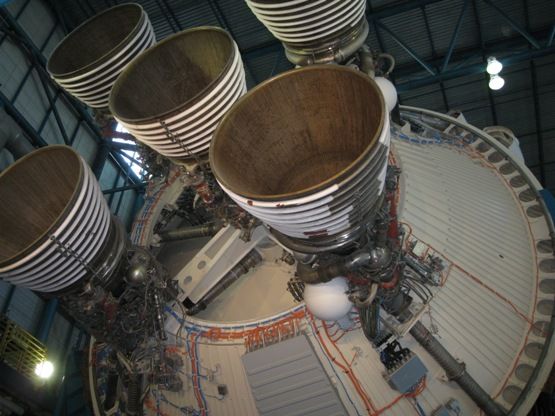
After that bone-jarring presentation, we were led into a huge building that housed the Apollo/Saturn V rocket. This was quite impressive. The Saturn V booster rocket alone is HUGE. Look at the 2nd picture that has human scale for you to compare.


We walked along the length of the rocket and saw various stages that separated at different times during launch.


A closer look at the Service Module and the Capsule.


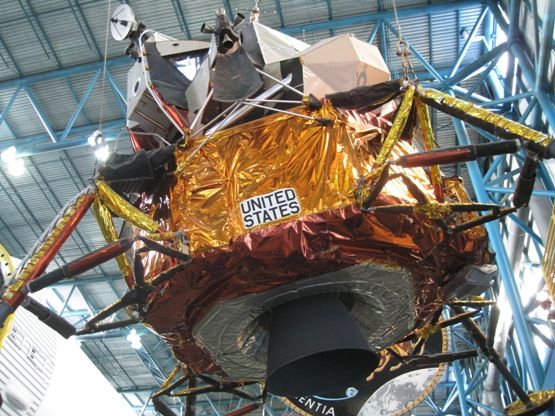
This is the lunar lander, which was the only part of the vehicle that landed on the moon, and which a big part of it gets left behind.

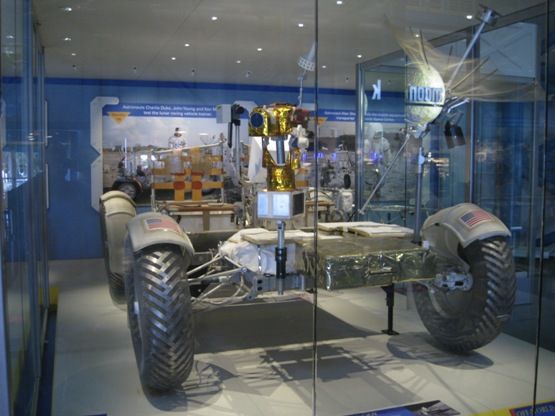
This is the buggy that they used on the moon.

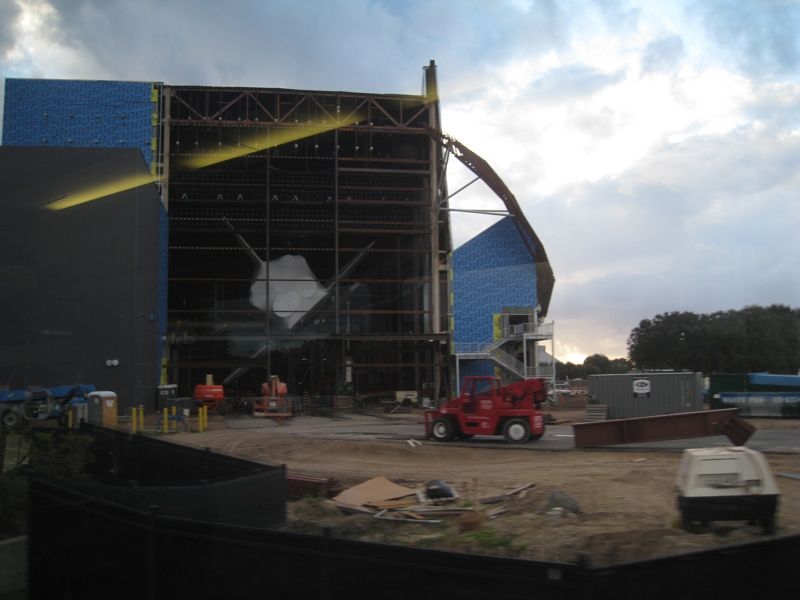
At the end of our visit, on the way out, we saw the construction of a building to house one of the Space Shuttle orbiter. This new attraction will open some time next year. So maybe this is a good reason to come back for another visit.

It was a wonderful experience. But being a physicist, I just wish that we had a tour guide familiar with the scientific/technical aspect of the program. As someone who is used to giving tours at our facilities, I'm always prepared to answer such questions, because you just never know if you get scientists in your audience. And I've had that a few times where physicists or engineers in the tour group started asking more "difficult" or more detailed questions. I supposed one has to know someone working there to be able to get a more personalized tour that will answer a more technical question.
So now you know a little bit of what I did on my last vacation! :)
Zz.
Still, my vacation had a "physics" component to it. As one of my stops, I visited the Kennedy Space Center in Cape Canaveral, Florida. I've never been to this place before, even though I've always wanted to go there especially during the Shuttle era. However, I never made it there till now, which I later found out, has its advantages. I will explain why that is so when we get to that point.
So this is the entrance to the visitor center. As you can see, there are constructions on new facilities that they are building to expand and enhance the visitor center.
We made it to what I jokingly called the rocket graveyard. These cover the history of rocket propulsion that led to NASA sending satellites and manned space craft into space.
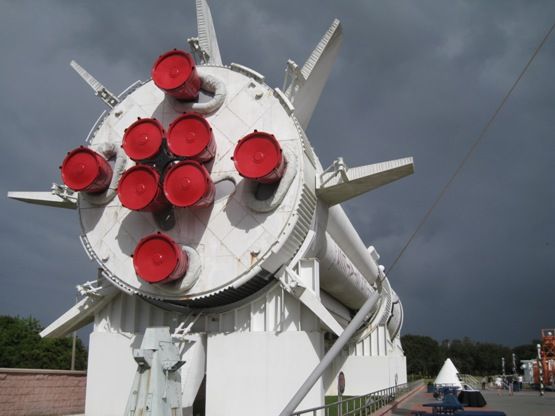
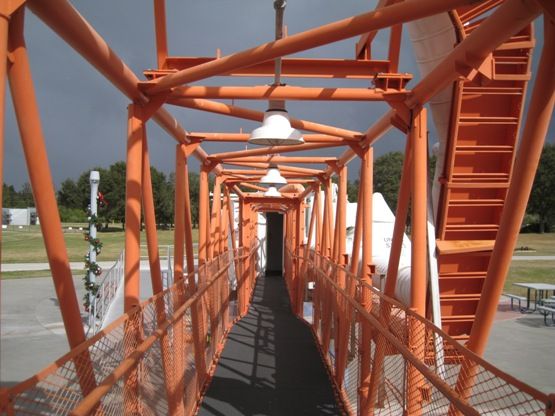
They had the bridge that used to connect the launch structure to the space module. So this is what the Apollo astronauts saw when they are walking into the capsule right before launch.
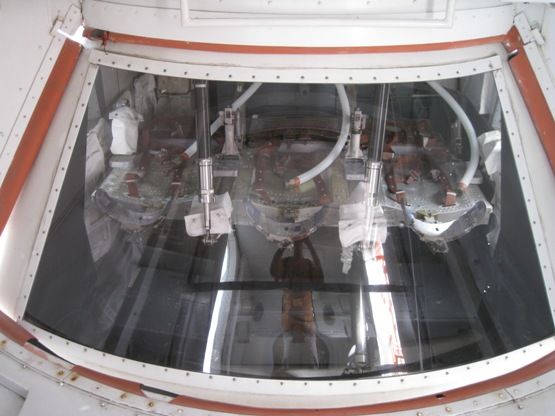
Here's what one of the capsules looks like. Man, was it tight!
I spent a bit of time looking around more of the visit center, but then took a tour that I signed up months ago. This is not your ordinary tour that they have running almost all day at the Space Center. This was a tour of the Launch Control Center. It appears that they started giving this tour about 2 months ago, and supposedly, they have not received any indication right now if it will go on after the New Year. This tour is only done once a day, and limited to less than 25 persons per tour. We were also not permitted to bring anything that we could not carry all the time, i.e. we were not allowed to put things down on the floor and walk away. This was beside the fact that we will be having 2 security escorts while in the building.
Now this is where coming here after the Shuttles had been retired was a plus. It turns out that they had never given the public access to the Launch Control Center (or what they refer to as the Firing Room) till now. In fact, most people working at the Kennedy Space Center have never been allowed to be in such a room. The reason why they are doing it now is because there are no more Shuttle launches. However, the room is still "operational", and it will be modified for NASA next program. That was the reason for all the restrictions and security.
Well, enough of that. Here are pictures that I took of the LCC. We arrived at the building and this was the lobby.
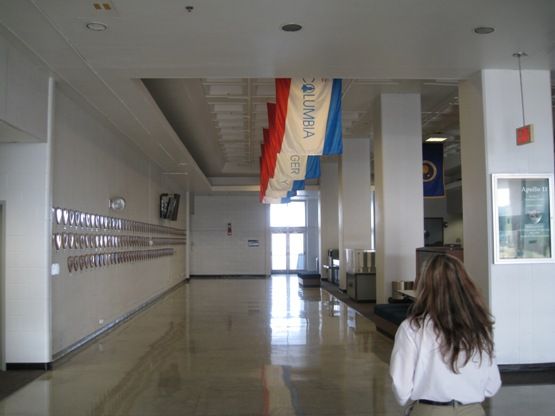
They have a few things on display in the lobby, including a very old console that, I think, was used during the Apollo program.
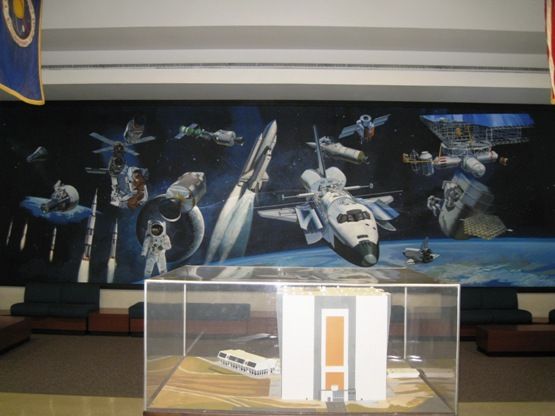
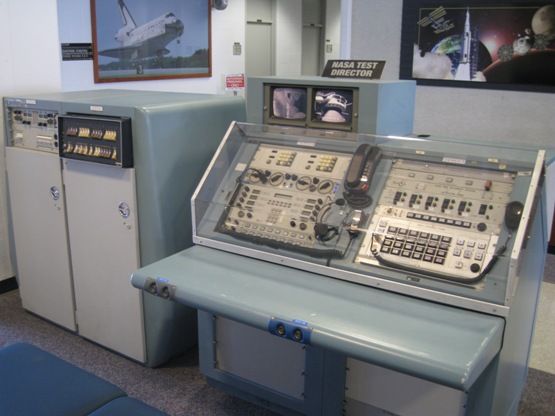
But what drew my eyes more was this wall of plaques of all the space launches that were done out of this building.
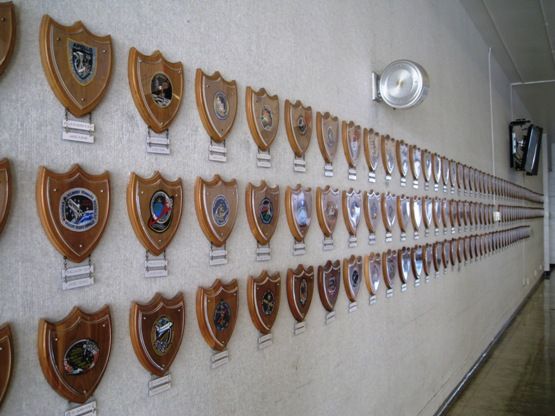
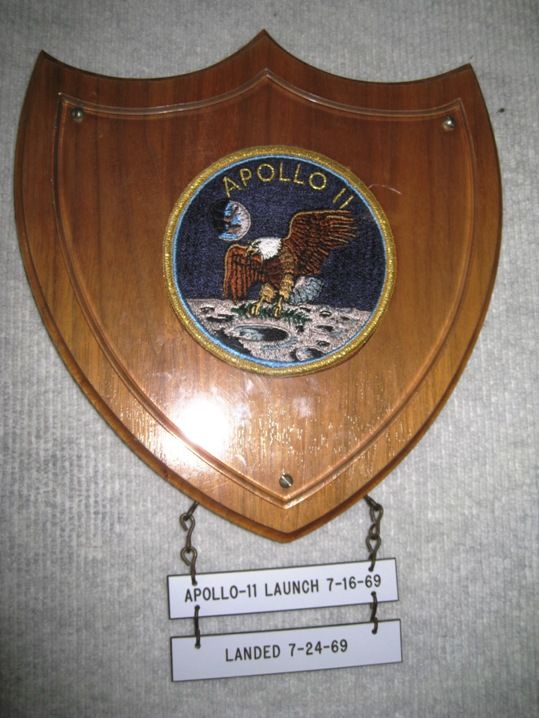
This includes the Apollo 11 mission,
and the first mission of the Space Shuttle
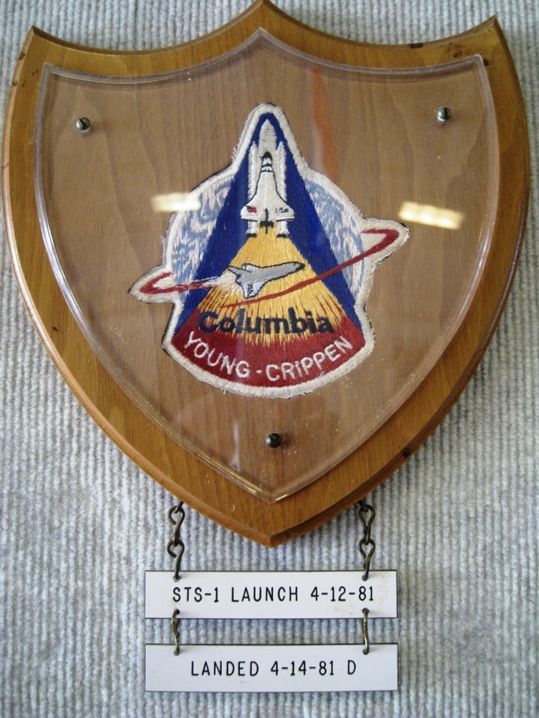
Each of the plaque had a launch date and the date it landed. However, two of the shuttle mission didn't have a "Landed" date, and those of course corresponded to the two tragic shuttle accidents.
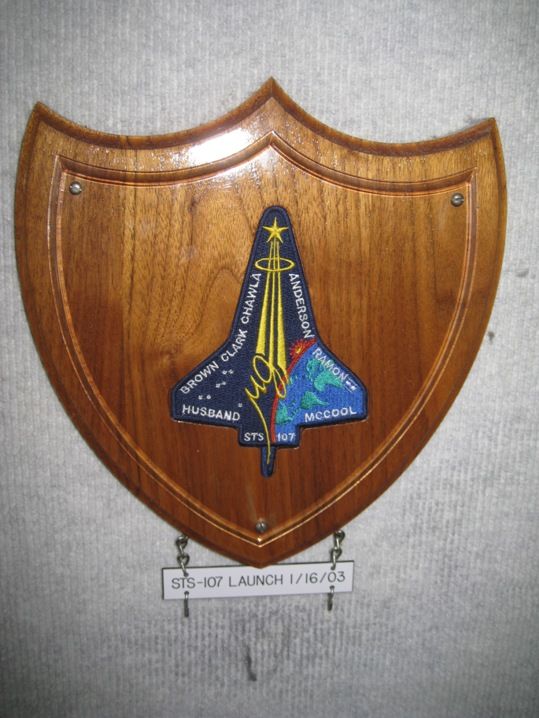
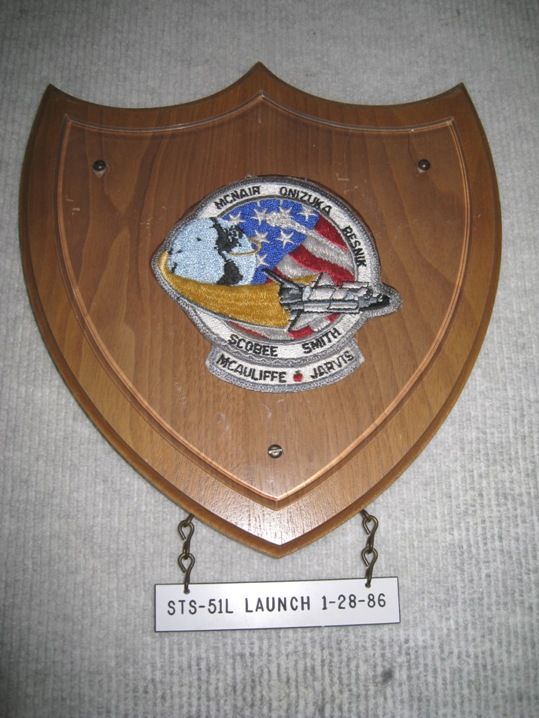
If you look closely at where the "Landed" tag should have been, you'll notice that the wall showed a bit more wear than usual. It turns out that NASA employees rub their fingers at these locations when they walked pass them as a sign that these astronauts are always in their thoughts.
We were then taken into an elevator up to the LCC. I don't quite remember seeing the firing room on TV (I'm more familiar with the Command Center in Houston). But it was still an impressive room, and we got to see it from various locations.
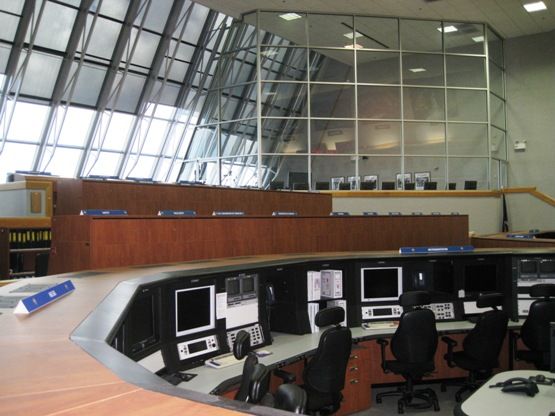
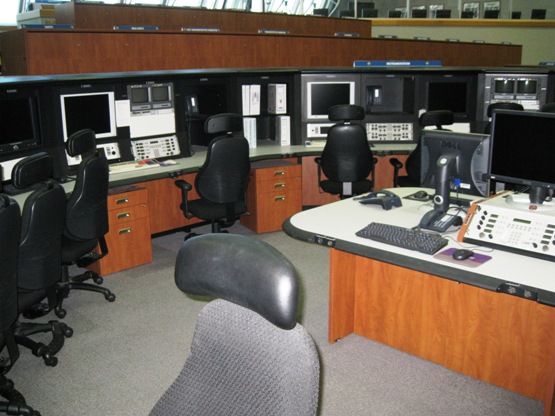
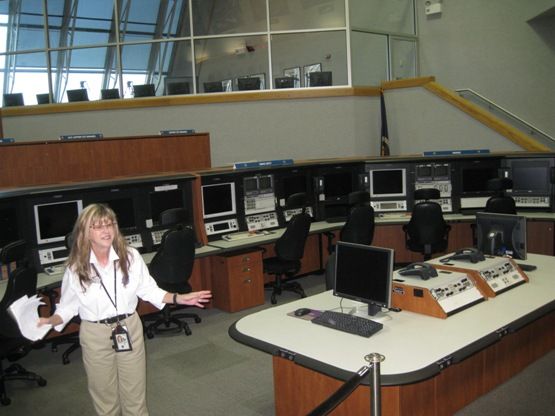
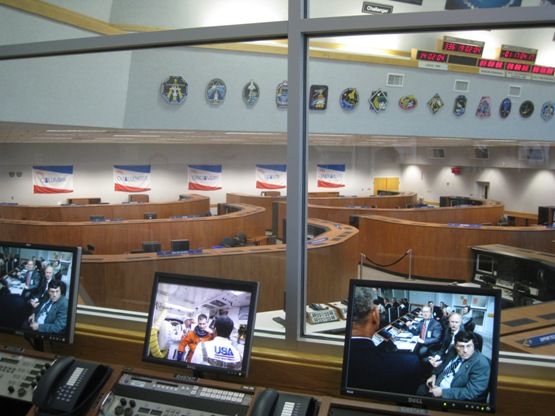
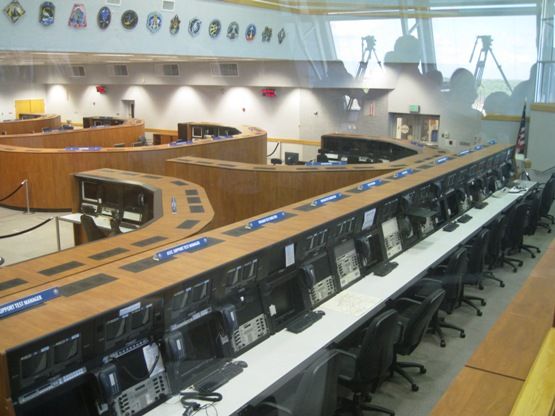
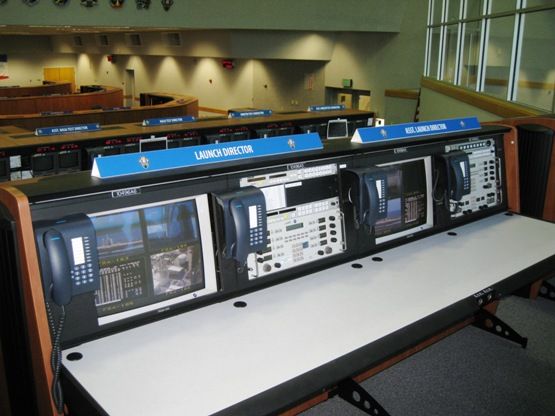
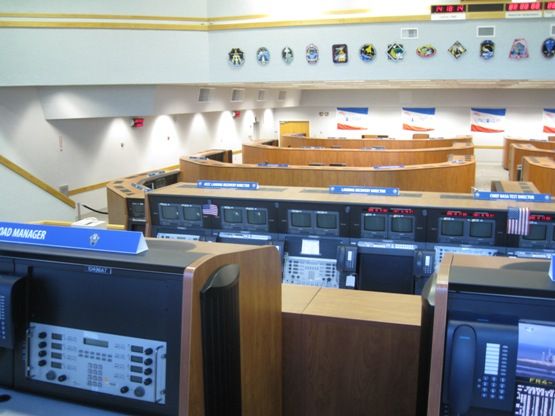
This was the view out of the window from the LCC. You can see the shuttle launch pad in the distance, and also the 2-lane gravel path that the crawler took from the shuttle assembly building to the launch pad.
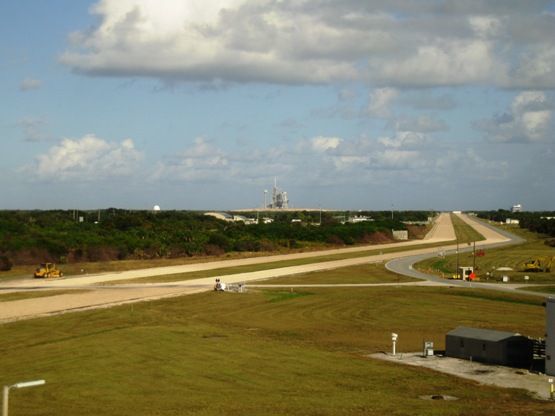
After a long visit to the LCC building, we then got back on our bus and got a tour of the grounds. First off is the shuttle launch pad. I can only imagine what it would look like if the shuttle is all set and primed to go. Of course, I've seen it on TV, but I'm sure it would have been significantly more impressive in person. I would love to know more about their cryogenic systems to produce all those liquid hydrogen and oxygen.
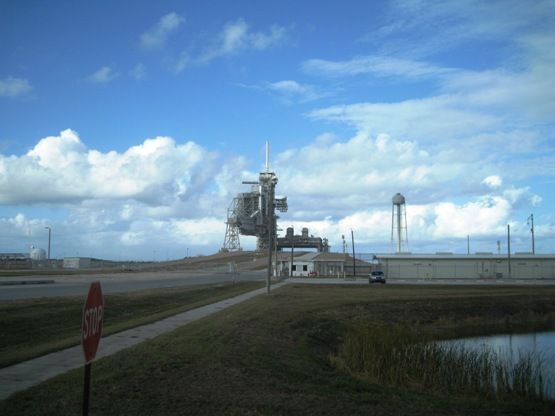
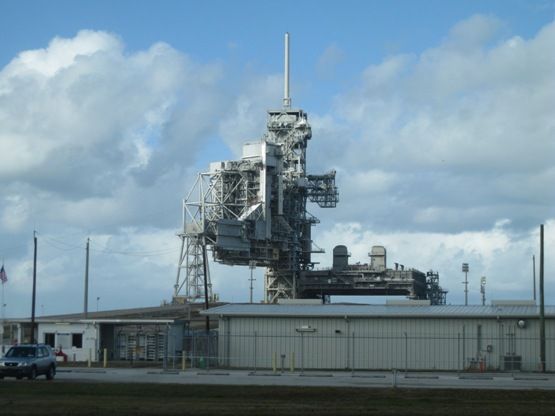
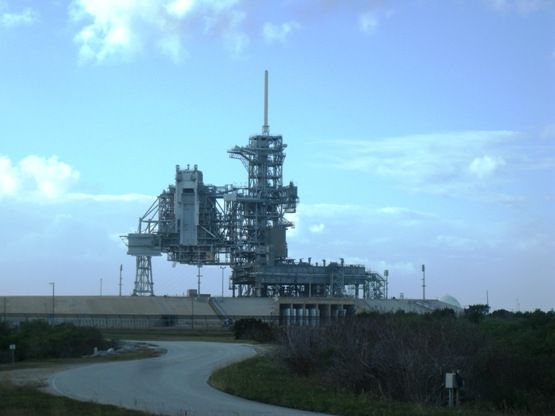
We were then driven around a new launch pad that they are building for the Orion program (did they get full funding for this? I must have missed it). Our tour guide was continually gushing over this to emphasize that NASA is not dead, and that the space program is back in operation and "we are back in business".
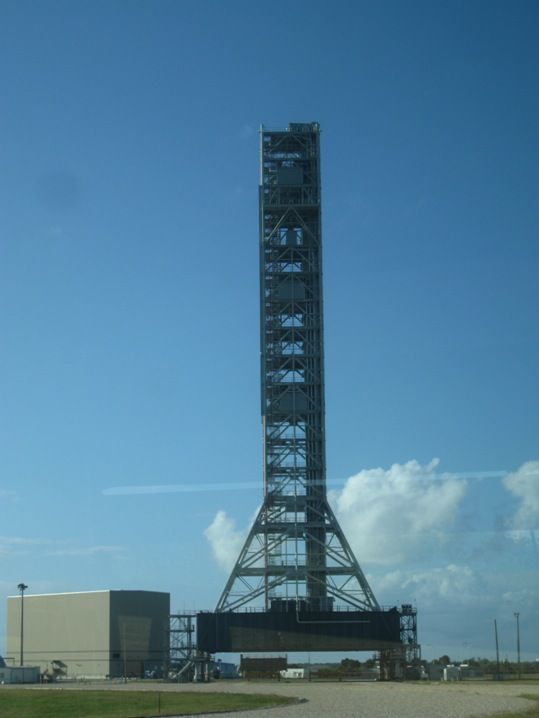
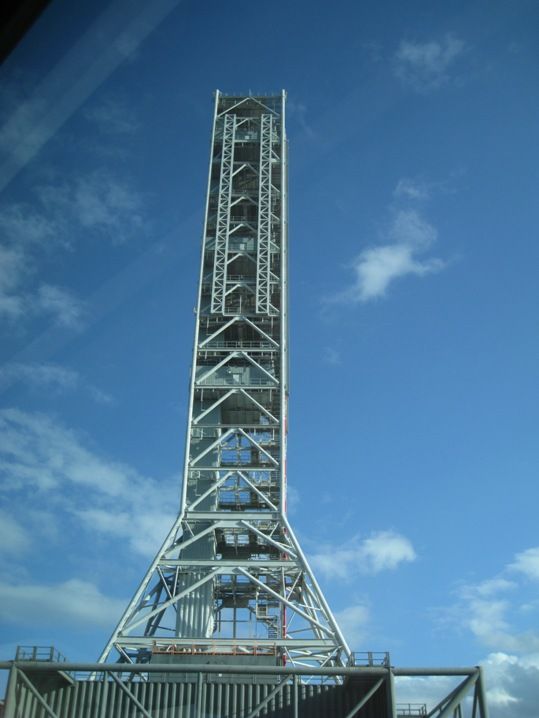
We also drove by the crawler, which is now sitting outdoors. If you don't know this, the crawler was the vehicle that brought the upright Space Shuttle (i.e. the orbiter, the external rocket, and the solid rocket boosters) from the assembly building to the launch pad. It literally crawled at about 1 mile per hour. While this may not have been that different than watching grass grows, I wouldn't have minded to see that either!
Our last stop was the Apollo experience. We were dropped off at a building and entered a room that simulated the firing of an Apollo rocket. The equipment in the room was authentic, and the audio and simulate was incredible because one could hear the windows rattled during take off.
After that bone-jarring presentation, we were led into a huge building that housed the Apollo/Saturn V rocket. This was quite impressive. The Saturn V booster rocket alone is HUGE. Look at the 2nd picture that has human scale for you to compare.
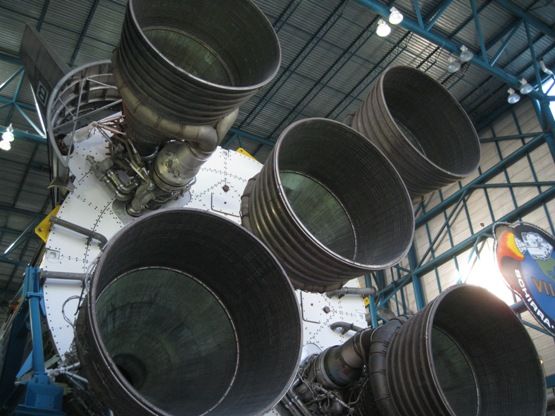
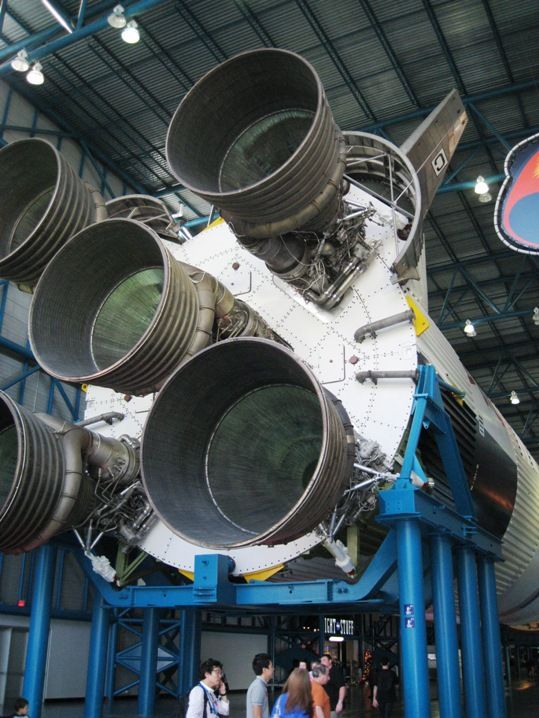
We walked along the length of the rocket and saw various stages that separated at different times during launch.
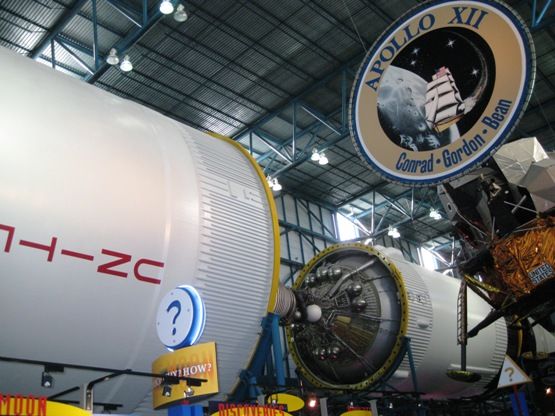
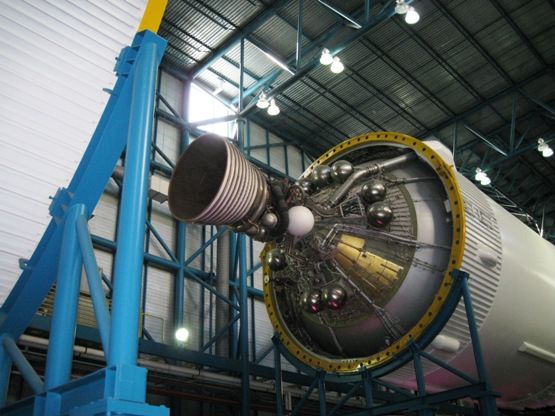
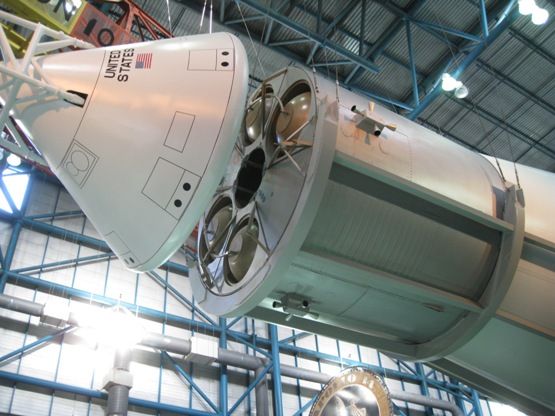
A closer look at the Service Module and the Capsule.
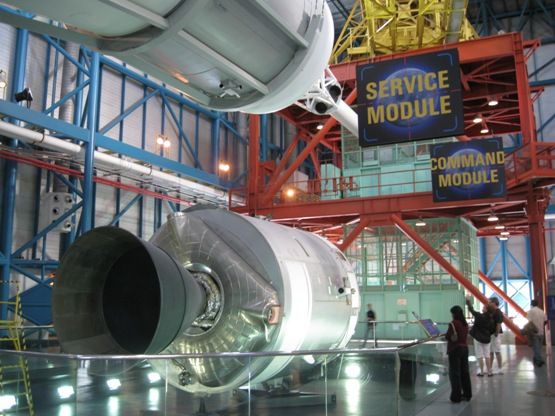
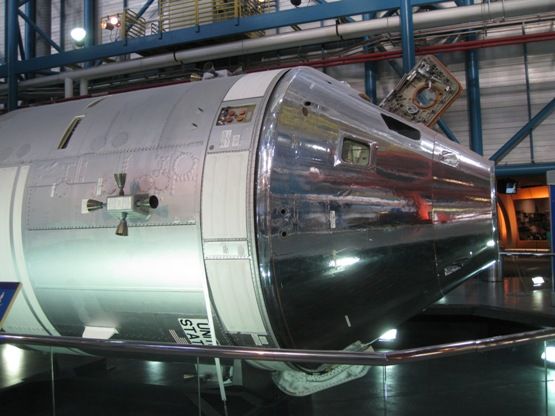
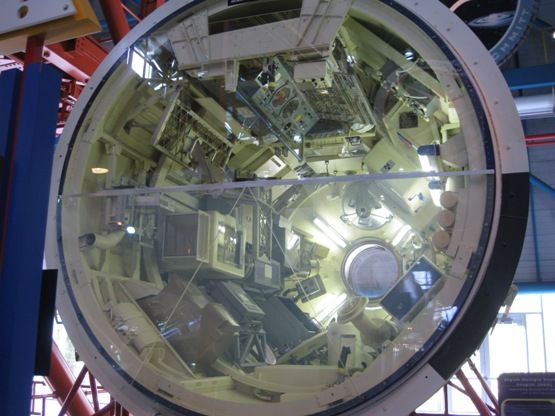
This is the lunar lander, which was the only part of the vehicle that landed on the moon, and which a big part of it gets left behind.
This is the buggy that they used on the moon.
At the end of our visit, on the way out, we saw the construction of a building to house one of the Space Shuttle orbiter. This new attraction will open some time next year. So maybe this is a good reason to come back for another visit.
It was a wonderful experience. But being a physicist, I just wish that we had a tour guide familiar with the scientific/technical aspect of the program. As someone who is used to giving tours at our facilities, I'm always prepared to answer such questions, because you just never know if you get scientists in your audience. And I've had that a few times where physicists or engineers in the tour group started asking more "difficult" or more detailed questions. I supposed one has to know someone working there to be able to get a more personalized tour that will answer a more technical question.
So now you know a little bit of what I did on my last vacation! :)
Zz.
Saturday, February 20, 2010
Traveling at Warp Speed Would Kill You
... but not due to what you might think!
William Edelstein, a professor at Johns Hopkins University’s School of Medicine, has thought of another scenario on why those people on the Starship Enterprise would not have survived traveling through space at close to the speed of light. And it has nothing to do with the contortions of warped spacetime either. It is more basic and more well-known that that.
So forget about the stuff that we barely know of. Just simple rudimentary high energy collisions that we already know of, and its radiation effects, which we also know of quite well, can already kill you.
Tough luck, space travelers!
Zz.
William Edelstein, a professor at Johns Hopkins University’s School of Medicine, has thought of another scenario on why those people on the Starship Enterprise would not have survived traveling through space at close to the speed of light. And it has nothing to do with the contortions of warped spacetime either. It is more basic and more well-known that that.
“I put in the Star Trek thing cause it would be dramatic,” he explains. The point of the paper was to really look at the impact of radiation at high speeds, he said. When you travel at high speeds in space “you are basically plowing through hydrogen,” he explained. “What actually happens as soon as they encounter the ship, the atoms split into protons and electrons and the protons mainly go through you and do damage.”
Edelstein said in an interview with the Star that the problem is when travelling in space at close to light speed hydrogen turns into “intense radiation” that kills humans and destroys electronic instrumentation. Even a ship’s hull of 10 centimetres in thickness would do nothing in terms of preventing damage.
In his presentation he said that a fatal dose of radiation for humans is six sieverts. And with his calculations a crew would receive a dose of more than 10,000 sieverts within a second.
So forget about the stuff that we barely know of. Just simple rudimentary high energy collisions that we already know of, and its radiation effects, which we also know of quite well, can already kill you.
Tough luck, space travelers!
Zz.
Thursday, February 04, 2010
Weinberg Says That Obama Gets Space Funding Right
In light of the new proposed 2011 budget and the Obama Administration decision to cut spending on the human spaceflight to the moon and Mars, Steven Weinberg wrote an opinion piece that praised this step.
The cost-to-benefit ratio, at least in terms of science output, is just not there for human spaceflight, and even the ISS for that matter. Decisions to do this have been based predominantly on politics, and funding appropriate home constituents. When one argues that such cutbacks can hurt science, and then to hear very prominent scientists disagree with that assessment, it kinda throw that claim into question.
Zz.
The manned space flight program masquerades as science, but it actually crowds out real science at NASA, which is all done on unmanned missions. In 2004 President George W. Bush announced a new vision for the space agency: a return of astronauts to the moon followed by a manned expedition to Mars. A few days later NASA's office of Space Science announced major cutbacks in its important Beyond Einstein and Explorer programs of unmanned research in astronomy. The explanation was that they "do not clearly support the goals of the President's vision for space exploration."
Soon after Mr. Bush's announcement I predicted that sending astronauts to the moon and Mars would be so expensive that future administrations would abandon the plan. This prediction seems to have come true.
The cost-to-benefit ratio, at least in terms of science output, is just not there for human spaceflight, and even the ISS for that matter. Decisions to do this have been based predominantly on politics, and funding appropriate home constituents. When one argues that such cutbacks can hurt science, and then to hear very prominent scientists disagree with that assessment, it kinda throw that claim into question.
Zz.
Friday, April 24, 2009
Why Is Moon Dust Sticky?
Hum... I didn't even know this "problem" exists, i.e. I didn't realize that moon dust is sticky.
(See? Even an old goat like me learn new things all the time!)
It appears that a physicist in Australia may have an explanation why moon dust is sticky.
So this isn't just something to tackle out of curiosity or for fun.
Zz.
(See? Even an old goat like me learn new things all the time!)
It appears that a physicist in Australia may have an explanation why moon dust is sticky.
Now, a scientist who has been studying the problem off and on over four decades thinks he may have untangled the mystery of why that dust is so sticky. Brian O'Brien, an Australian physicist who worked on the Apollo program in the 1960s, said the sun's ultraviolet and X-ray radiation gives a positive charge to the dust, making it stick to surfaces such as spacesuits.
.
.
Over two years of painstaking research, O'Brien tracked the dust accumulating on two solar cells, one horizontal and one vertical, over the course of two lunar days. That may not sound like much time, but a lunar day equals nearly 30 days on Earth.
He found that little dust collected on the horizontal cell in the lunar morning, when the sun's rays were slanted, while more dust adhered to the vertical cell, which more directly faced the rising sun.
The weaker the sun's rays, he found, the weaker the electrostatic forces causing the dust particles to stick, until the dust fell off.
Some scientists believe that one of the greatest challenges for future lunar colonists will be keeping their lungs free of the particles, each thinner than a human hair but sharp as a razor.
So this isn't just something to tackle out of curiosity or for fun.
Zz.
Monday, January 14, 2008
An Interview With Steven Weinberg
Oh, I just LOVE this! :)
The Space Review has an interview with Nobel Laureate Steven Weinberg, and he aimed dead center at the International Space Station and the current Administration obsession of human space travel.
You got to snicker when a piece starts off with that type of paragraph! :)
Notice also the very sharp point he made about the Alpha Magnetic Spectrometer, which I've mentioned on here. It is INSANE that the one piece of effort that would have justified the scientific existence of the ISS is being dropped in favor of completing the building of the ISS. NASA still hasn't told us what they're building the ISS for. So far, they're simply building it for the same of building it.
You may not agree with him, but you cannot deny that this interview is fascinating.
Zz.
The Space Review has an interview with Nobel Laureate Steven Weinberg, and he aimed dead center at the International Space Station and the current Administration obsession of human space travel.
Steve Weinberg told a dark energy workshop in September that, “I see on the part of the president and the administrators of NASA… an infantile fixation on putting people into space, which has little or no scientific value.”
You got to snicker when a piece starts off with that type of paragraph! :)
Notice also the very sharp point he made about the Alpha Magnetic Spectrometer, which I've mentioned on here. It is INSANE that the one piece of effort that would have justified the scientific existence of the ISS is being dropped in favor of completing the building of the ISS. NASA still hasn't told us what they're building the ISS for. So far, they're simply building it for the same of building it.
You may not agree with him, but you cannot deny that this interview is fascinating.
Zz.
Thursday, August 09, 2007
Endeavour Lifts Off - And It's A Waste Of Money?
Endeavour had a smooth lift-off yesterday on a journey towards the International Space Station. This news article has a brief report on the event and its mission. But what is more fascinating is the accompanying side article on the cost and scientific advances (or lack of it) of manned space flight. Could manned space flight really be a waste of money? They of course interviewed Bob Park, who has been a constant and vocal opponent who questioned the need for such a thing.
I had a chuckle when I read the response to Bob Park's criticism:
There are two aspects to this:
1. It re-enforces what I wrote earlier that the general public can be easily duped by superficial demonstrations. Thus, manned space flight is one such superficial demonstrations that has almost no scientific advancement value that commensurates with the cost. Yet, it is what the public wants to see and what is being used to get support for NASA and the space program.
2. It is a rather sad reflection on how we have to do things to get support. Do the public realize that we have to dumb things down, make it full of bells and whistles before they would support such a thing?
Zz.
Park asks: "What is it that we are sending the humans to find? What is it that we're sending them to do that we can’t design a machine to do better?"
"If it's just for the thrill, send them bungee jumping. This is not a thrill the taxpayers ought to be paying for."
I had a chuckle when I read the response to Bob Park's criticism:
But sending people to the stars is seen as central to the frontier spirit that America still embraces and Nasa depends on the enchantment of the public to support its $17bn a year budget.
Roger Launius, Nasa's former chief historian says "this is where science meets psychology".
"The American space programme is, to many Americans, a critical chapter of US history which began with first settlers on ships then pioneers in wagons."
There are two aspects to this:
1. It re-enforces what I wrote earlier that the general public can be easily duped by superficial demonstrations. Thus, manned space flight is one such superficial demonstrations that has almost no scientific advancement value that commensurates with the cost. Yet, it is what the public wants to see and what is being used to get support for NASA and the space program.
2. It is a rather sad reflection on how we have to do things to get support. Do the public realize that we have to dumb things down, make it full of bells and whistles before they would support such a thing?
Zz.
Monday, July 16, 2007
50 Years in Space: An International Aerospace Conference Celebrating 50 Years of Space Technology
This is a news report on the upcoming conference celebrating the 50th anniversary of space exploration. It will be held at CalTech in Pasadena, CA.
It's 50 years already?
Zz.
It's 50 years already?
Zz.
Sunday, April 29, 2007
Just 120 Trillion Miles From Home
This New York Times article explores the means and the difficulties of visiting the newest celestial system discovered to contain an earth-like planet.
It's a daunting task to get there, and we certainly do not have the propulsion technology yet to realisticallly achieve that.
Zz.
It's a daunting task to get there, and we certainly do not have the propulsion technology yet to realisticallly achieve that.
Zz.
Subscribe to:
Posts (Atom)