Friday, November 12, 2010

The Physics of High Heels

I, of course, have zero clue on what's involved in wearing high heels, and I don't plan on changing that any time soon. Still, out of curiosity, I read this article because, frankly, it had crossed my mind how many of these women, especially in the entertainment business, not only could walk, but also dance wearing such high heels. Just go to a typical Broadway musical, for example, and see the moves these women could make while in these pumps.

"Many of my physicist colleagues have no trouble understanding quantum mechanics but can't figure out how women can wear high heels," admitted Dr. Laura Grant, a physicist from Liverpool University.

Yet the recipe for safe stilettos seems fairly straightforward: Two parts sacrifice and a dash of solid steel, said Fred Allard, creative director for Nine West, one of the world's largest manufacturers of women's shoes.

Well, even after reading this whole article, I don't think it has made a sufficient argument that such a thing is "stable". Rather, it is more of having the "skill" to be able to wear these things, very much like being able to ride a bicycle. At some point, after you wear it often enough, you learn how to balance in them.

I'd like to hear from women physicists and engineers on what they think of the physics of these high heels.

Zz.

How Cats Drink

Hey, we seem to be getting quite a bit of pet physics lately. First we had the study on the wet-dog shake, which I thought was quite informative and entertaining. Now along comes a study on how cats lap at liquids when they take a drink[1].

Watching in slow motion reveals that cats of all sizes, from tabbies to tigers, have a very elaborate way of drinking. First, they move the tip of their tongue onto the surface of the water to flick the water up so that a little jet of liquid flies into the air. Then, in a flash, they catch the jet in their mouth.
So you can watch the motion of this yourself.


And now, for the dogs.


Zz.

[1] P.M. Reis et al., current published on Science Express.

Thursday, November 11, 2010

Rust And Entropy

I've tried to tackle plenty of news reports and documents that purportedly are based on physics, but really are nothing more than either errors, or complete bastardization of things the writer didn't understand. This is another example, but done by Dan Styer and published in Nov. issue of AJP (D. Styer Am. J. Phys. v.78, p.1077 (2010)). In it, he tackles the claim from several sources that rust occurs due to entropy, i.e. the tendency towards an increase in entropy. He cited several sources for having such a "theme".

This particular quote comes from an online source: Cutler J. Cleveland and Robert Kaufmann, “Fundamental principles of energy,” in Encyclopedia of Earth, last updated 29 August 2008 accessed 12 May 2010. But the spirit of this quote can be found in many places., “Entropy tends to make our eyes grow weaker as we age… entropy causes iron and other metals to rust” appears in Louis M. Savary, Teilhard de Chardin: The Divine Milieu Explained (Paulist Press, Mahwah, NJ, 2007), p. 163., “Entropy imposes itself in the form of limitation and in the natural tendency toward confusion and chaos, toward decay and destruction. Entropy is why ice cream melts and people die. It is why cars rust and forests burn. Preponderantly, the second law describes effects that we don't want to see” appears in Gilbert L. Wedekind, Spiritual Entropy (Xulon, Fairfax, VA, 2003), p. 68.

Of course, anyone who has studied chemistry in college can pick up what's wrong with such a claim. As Styer pointed out, rust occurs when two types of elements interact, i.e. iron and oxygen, via the reaction

Now, one can assume that Fe is in a solid form, while oxygen is in a gaseous form. In general, it is clear that a gas will have a higher entropy than a solid. So what is going on here is that we have an initial condition of a solid iron and a gaseous oxygen, and ending up with a solid rust (iron oxide). This final condition should actually have a lower entropy than solid iron plus oxygen gas. So the entropy of this system should have decreased, not increased as claimed in the cited references.

Of course, the whole entry of the universe does not decrease since the process involved a change in entropy of the surrounding that is higher. But as Styer indicated, the iron+oxygen system itself has a decrease in entropy. Proclaiming that rust occurs because of entropy (i.e. Thermo's 2nd Law) is faulty.

Zz.

Wednesday, November 10, 2010

"Mystery Missile" was "A Plane! A Plane!"

It may not be "The Plane!", but it certainly can be a plane as the most plausible explanation for the mystery missile over Southern California that caused all of these brouhaha.

It looked like a missile launch, he said, because of an optical illusion that made the contrail appear as though it started on the ground and zoomed straight up. In reality, he said, the contrail began on the horizon and ran parallel to the ground.

"It was an unusually clear day," he said. So what looked like a missile launch 35 miles off the coast of Los Angeles was actually the contrail of a jet that stretched 300 miles into the distance, he said. "At the end of the day, you really have to go with the simplest explanation," he added.
.
.
.
Harvard astronomer Jonathan McDowell told New Scientist that because a helicopter in flight recorded the video of the incident, it employed a visual angle that distorted the arc of the contrail. That effect was compounded, McDowell maintained, by the distinctive lighting of the sky at twilight--and the net result was a bit of an optical illusion.

"What isn't clear to me is whether anyone but this helicopter saw it," McDowell said. "If it's coming over the horizon, straight at you, then it rises quickly above the horizon. You can't tell because it's so far away that it's getting closer to you -- you'd think it was just going vertically up."

There you have it!

Zz.

Saturday Morning Physics

I love, love, LOVE something like this. If you are in Ann Arbor, MI, you are damn lucky!

This news article highlights the "Saturday Morning Physics" held at the University of Michigan.

"It started over in West Hall in a small auditorium and about 50 people came to the first one," said Carol Rabuck. "By the second one, they had to come over here (Dennison Auditorium) and we've been popular ever since."

Brad Orr, chairman of the Physics Department at the University of Michigan, said people enjoy it because it's accessible to the layperson and the speakers try to make technical subjects across a wide variety of science accessible so people can learn from them.

"Really, from Day 1, there have been several hundred people coming," he said. "And whether it's high school students who are coming because their teachers have encouraged them or given them extra credit, college students, we encourage this in our classes ... or parents will come with their kids, or retired folks. It's just a really broad spectrum of the community."

LOVE IT!

This is the type of activities that we sorely need more of. It isn't just the opportunity to learn about physics, but also the accessibility of the public to talk to physicists and ask questions that they either are curious about, or don't understand. I've always applaud such activities, including those coffee-house physics activities, and the likes. The fact that this Saturday morning physics has become wildly popular is clear evidence that if we have such a thing and promote it well, the people will come!

We truly need more of this. Universities in large cities with good physics departments should organize something like this.

Zz.

Physics Brainteaser Posters

It appears that the Institute of Physics has produced "physics brainteaser" posters that are now up in various public transportation in several cities in N. Ireland.

The poster campaign, Transport Yourself with Physics, was all about getting the public to engage with the subject, said Alison Hackett, policy officer with the institute.

The institute, with the support of the Government’s Discover Science and Engineering programme, organised the campaign, which was launched to coincide with Science Week Ireland.

The posters are now visible on buses and trains in Galway, Cork, Limerick and Waterford. In Dublin they are installed along Dart and Arrow train services and on Dublin Bus. About 200 buses in Northern Ireland have posters in place, Ms Hackett said.

If I recall correctly, a similar campaign was also done somewhere in Massachusetts a while back, where physics posters were on buses.

While I certainly like such a thing, I would also like to see posters linking specific discovery or advancement in physics that led to things like the iPhone, MRI, etc.. etc.. i.e. linking physics to things that the public use everyday. Most people do not realize how they use discoveries in physics. Rather than make some general statement about its usefulness, it would be even more fascinating if one could simply show the "chain of events" that led from one thing all the way to its application and device.

Zz.

Tuesday, November 09, 2010

Mathematics and Physics

I can't say whether I completely agree with the content of this report, but it is certainly interesting to consider.

This news article reports on a lecture given Dartmouth on the interaction between Physics and Mathematics, its common history, and how they are now different but interconnected. The lecturer has an interesting point on when in history the field of physics and mathematics split.

The fields began to divide in the late 1800s, she said, with individuals coming to identify with one of the two fields.

“The big question is, what happened between the early 1800s and late 1800s?” she said. “Why was there a split into mathematics and physics? The answer: Fourier happened.”

Joseph Fourier is best known for his development of the Fourier series, a method of breaking sounds into components. The method explains, for example, why a violin sounds different from a flute, Singer said. But in addition to the Fourier series, Fourier came up with the theory of heat distribution, a model for how heat travels on a thin, metal plate.

“This [theory] lit up a crisis in the scientific world,” Singer said. “And the resolution of this crisis split natural philosophy.”

Natural philosophers had formerly agreed upon the definition of a function as a formula and a formula as a function, according to Singer. But to support his theories, Fourier used functions, but not formulas — contradicting the commonly held notion that the two were interchangeable, she said.

As a result of this unprecedented disagreement, mathematics and physics diverged from one another. Those who agreed with Fourier became physicists and those who didn’t became mathematicians, she said.

Wow. So we can blame it all on Fourier? Or maybe some would think that we can thank it all on Fourier! :)

Zz.

Today Is Carl Sagan Day

November 9, 2010 is Carl Sagan Day. Here's a chance for you to learn more about this illustrious astronomer, whose name you may have heard, but whose impact you may not have realized.

Zz.

Monday, November 08, 2010

Possible Observation of Hawking Radiation In A Lab? - Follow-up

I mentioned an earlier news report about the claim of an observation of a Hawking radiation-like radiation using an optical system. The APS Physics has released a very good in-depth description of the work and also allowed everyone to download the paper for free! How about them apples?

Zz.

A Review of One-Way and Two-Way Experiments to Test the Isotropy of the Speed of Light

I try not to highlight preprints on ArXiv until they are published (the exception being if it was a proceeding or a speech, or it is by someone prominent), but this is way too interesting to sit on.

I'm guessing that this is a manuscript for publication. The authors have done a thorough compilation of experiments that test the isotropy of the speed of light, one of the foundational postulates of Special Relativity. It is always nice and convenient to have not only the data, but also to have all the references in one convenient location or document. And this is one such document. One can usually see an improvement in the accuracy of measurement that is commensurate with a lower upper limit in the violation of SR postulate. The exception here being the one-way measurement of the speed of light. Rather interesting.

Zz.

Sunday, November 07, 2010

Heavy Ion Collision at LHC

This is a very good article to explain the difference between p-p (or p-pbar) collision, and heavy ion collision, and why they are important. The LHC has recently switched beam source from protons to lead nuclei, and will be studying heavy ion collisions, very much like RHIC. The article has a nice summary on the energy scale that this collision will be relevant to.

As particles collide at higher and higher energies, different physical effects occur. For example, if atoms collide with high enough energies, they knock electrons off each other - they ionise. Experiments which map the cosmic microwave background (like COBE, WMAP and Planck) look at the physics from the moment (about 400,000 years after the start) when the universe got so cool that this ionisation stopped happening. Before that everything was plasma. Plasma is the stuff which glows in fluorescent lightbulbs.

Go further back, a few minutes after the big bang, and energies get so high that even atomic nuclei can't hold together. At this point, protons and neutrons are everywhere. These are the kind of energies you need for nuclear fusion, as is being attempted at ITER.

Back a big step further (about 0.00000000001 seconds after the big bang) and the protons and neutrons can't even stay whole. The quarks and gluons that they are made of spread over the whole universe (which is quite small at this point). This is a new form of matter we refer to as "quark-gluon plasma", though evidence from experiments at RHIC indicates it may behave more like a quark-gluon liquid in fact. This is the stuff the LHC will be able to reproduce now, and which the experiments will study - especially ALICE, which is built for this purpose.

This is a good explanation if you don't understand why, for example, RHIC and CEBAF are a bit different than LHC (when it was doing p-p collision) and the Tevatron, even though all 4 of them are basically particle colliders. They are studying different energy regimes, and possibly different types of processes.

Zz.

Saturday, November 06, 2010

Everyday Entanglement

This is a very nice summary of the physics of quantum entanglement. It'll give you a quick synopsis of this phenomenon if you've been asleep these past few decades. If you have followed this blog for any considerable period of time, you would have noticed that we covered many of the examples, papers, and issues mentioned in this article (just do a search).

Zz.

Bronx Physics

An interesting coverage of an amazing high school in the US, Bronx High School of Science, that has produced SEVEN Nobel Prize winners in physics.

On 15 October this year, Bronx Science, as it is colloquially known, was officially designated a "historic physics site" in a ceremony organized by the American Physical Society (APS). The high school joins an imposing list of 18 other landmarks with that status. They include Bell Labs in New Jersey, where the transistor was discovered, the Massachusetts Institute of Technology's Radiation Laboratory, which helped to develop radar, the University of Chicago site where Robert Millikan measured the charge on the electron, and the spot outside Cleveland, Ohio, where Albert Michelson and Edward Morley did their epochal ether-drift experiment.

Located in the northwest corner of New York City, Bronx Science owes its historic status to the fact that seven future Nobel-prize-winning physicists went through its doors – more than any other high school in the world and more than most countries have ever achieved. The school, which opened in 1938, was founded by the educator Morris Meister, who believed that if a school put bright students together, it would kindle ill-defined but valuable learning processes. The school seems to have proved him right: according to the Bronx laureates, their physics learning took place mainly outside the classroom.

It is fitting that it became a physics historic site here in the US.

Zz.

Friday, November 05, 2010

An Interview With Albert Einstein

This is a rather "interesting" way of doing it. Science News Editor-in-Chief Tom Siegfried "conducted an interview" with Albert Einstein on his objection to quantum mechanics. Einstein's responses were based on his writings on the subject.

I suppose that for many of us who are familiar with this history, there's nothing surprising here. However, if we were to conduct this interview today, one certainly cannot ignore the dramatic advancement we have made with the Bell-type family of experiments, something that Einstein didn't live to see. So presumably, he didn't have much to say about this phenomenon and so, this "interview" could not speculate on what his response would be if we were to present to him such a question. To be, that would be the question that I would pose, and I would be highly curious on his response to it.

Zz.

Thursday, November 04, 2010

Physics Doctorate - One Year Later

The AIP has just released the result of a new statistics that polled Physics Ph.Ds on the state of their career one year after they received their degrees. The result comes from degree recipients from the class of 2007 and 2008, so the poll was conducted right in the height of the economic crash.

Interestingly enough, the percentage of Ph.Ds in postdoctoral position continues to decline, while those getting potentially permanent position increased. What is also interesting is that, no matter what the unemployment situation is in the US, the unemployment rate of physics Ph.D remained relatively unchanged throughout the years.

Foreign citizens continue to go into the postdoctoral position more than US citizens. Understandably, they do not have a higher percentage that are in a potentially permanent job position than US citizens 1 year after their degrees.

Would be interesting to compare this with the initial employment right after graduation.

Zz.

Quantum Mechanics in Biology

This appears to be a report on a lecture given by Seth Lloyd at the Perimeter Institute. It covers how various biological organisms or functions work via quantum mechanics.

Bird navigation, plant photosynthesis and the human sense of smell all represent ways living things appear to exploit the oddities of quantum physics, scientists are finding.

Supposedly, the video of this lecture will appear on the Perimeter Institute website, but as of this morning, it isn't up yet.

Zz.

Wednesday, November 03, 2010

Topological Superconductor?

We know how "hot" topological insulator is right now in condensed matter. Huge amount of publications are pouring out on this family of material. Well, it seems that in one type of topological insulator, B12Se3, when doped with copper, it becomes what is claimed to be a topological superconductor! This is where the material becomes a superconductor in the bulk of the material, but still becomes a normal metal on the surface.

Generally, metals, insulators and conventional superconductors tend to have a single type of behavior as far as electricity goes. They can either conduct current or not, and remain consistent in they way they respond to electrical charges.

“The known states of electronic matter are insulators, metals, magnets, semiconductors and superconductors, and each of them has brought us new technology,” explains M. Zahid Hasan.

“Topological superconductors are superconducting everywhere but on the surface, where they are metallic; this leads to many possibilities for applications,” adds the expert.

Here is the abstract from the Nature Physics paper[1]:

Experimental observation of topological order in three-dimensional bulk solids has recently led to a flurry of research activity. Unlike the two-dimensional electron gas or quantum Hall systems, three-dimensional topological insulators can harbour superconductivity and magnetism, making it possible to study the interplay between topologically ordered phases and broken-symmetry states. One outcome of this interplay is the possible realization of Majorana fermions—quasiparticles that are their own antiparticles—on topological surfaces, which is of great interest in fundamental physics. Here we present measurements of the bulk and surface electron dynamics in Bi2Se3 doped with copper with a transition temperature Tc up to 3.8 K, observing its topological character for the first time. Our data show that superconductivity occurs in a bulk relativistic quasiparticle regime where an unusual doping mechanism causes the spin-polarized topological surface states to remain well preserved at the Fermi level of the superconductor where Cooper pairing takes place. These results suggest that the electron dynamics in superconducting Bi2Se3 are suitable for trapping non-Abelian Majorana fermions. Details of our observations constitute important clues for developing a general theory of topological superconductivity in doped topological insulators.

Zz.

[1] L.A. Wray et al., Nature Physics v.6, p.855 (2010).

What Is Quantum Mechanics Good For?

This is a question I get on a regular basis. I even see it in the news when politicians belittled some basic research that he/she didn't understand and thus, could not see the implications.

This interview article with James Kakalios on his book "The Amazing Story of Quantum Mechanics" has just enough details to pacify such a question on what QM is good for.

I present in the introduction what I call a "workingman's view" of quantum mechanics and show how if you accept on faith three weird ideas—that light is a photon; that matter has a wavelength nature associated with its motion; and that everything, light and matter, has an intrinsic angular momentum or spin that can only have discrete values—it turns out that you can then see how lasers work. You can see how a transistor works or your computer hard drive or magnetic resonance imaging—a host of technologies that we take for granted that pretty much define our life.

There were computers before the transistor; they used vacuum tubes as logic elements. To make a more powerful computer meant that you had to have more vacuum tubes. They were big, they generated a lot of heat, they were fragile. You had to make the room and the computer very large. And so if you used vacuum tubes, only the government and a few large corporations would have the most powerful computers. You wouldn't have millions of them across the country. There would be no reason to hook them all together into an Internet, and there would be no World Wide Web.

The beautiful aspect to this is the scientists who developed this were not trying to make a cell phone; they were not trying to invent a CD player. If you went to Schrödinger in 1926 and said, "Nice equation, Erwin. What's it good for?" He's not going to say, "Well, if you want to store music in a compact digital format..."

But without the curiosity-driven understanding of how atoms behave, how they interact with each other, and how they interact with light, the world we live in would be profoundly different.

I've always believed that as a physicist, you need to have a set of "here's what this was used for" examples on your back pocket at all times. When someone asked you "what is so-and-so good for?", you should be able to whip out immediately the direct application to such a thing.

Now, granted, some areas of physics will be more difficult for us to do that than others. However, you should always have a read-made answer, and the way Kakalios tackled in the above example of QM is the way it should be dealt with.

Zz.

Tuesday, November 02, 2010

Possible Detection of Sterile Neutrinos?

It looks like the MiniBooNE experiment is producing very tantalizing results that might point to the existence of sterile neutrinos.

An electron neutrino might become a muon neutrino, and then later an electron neutrino again. Scientists previously believed three flavors of neutrino exist. In this Mini Booster Neutrino Experiment, dubbed MiniBooNE, researchers detected more oscillations than would be possible if there were only three flavors.

"These results imply that there are either new particles or forces we had not previously imagined," said Byron Roe, professor emeritus in the Department of Physics, and an author of a paper on the results newly published online in Physical Review Letters[1].

"The simplest explanation involves adding new neutrino-like particles, or sterile neutrinos, which do not have the normal weak interactions."

Zz.

[1] A. A. Aguilar-Arevalo et al., Phys. Rev. Lett. 105, 181801 (2010).

Monday, November 01, 2010

2010 Jefferson Lab Open House

Video highlights from this year's Jefferson National Laboratory Open House.


As I've said numerous times, if you have the chance to visit any of the US National Labs, especially during one of these open houses, don't miss the opportunity. Not only do you get to see many amazing research facilities, you get to talk to the scientists and engineers who are passionate about what they do, and get first-hand information on a lot of things.

Zz.

Is the International Space Station Worth $100 Billion?

For many, the answer to that question is a resounding "no". Bob Park is certainly one of the many critics of the ISS, something you would have noticed if you have followed his "What's New" regularly.

This article examines the ISS as it approaches what could be an important phase in its existence.

Now, as NASA celebrates the 10th anniversary of astronauts living on the space station — and with construction essentially complete, the question remains — will the International Space Station ever really pay off scientifically?

In many facilities, the "worth" of such facility is justified by either (i) the amount of scientific publication emanating from work done at such a facility and/or (ii) the level of ground-breaking work produced from work done at such facility.

Can the ISS show such a thing?

Zz.

Sunday, October 31, 2010

Abdus Salam Ignored In The Muslim World?

As THE most prominent muslim physicist, one would think that Nobel Laureate Abdus Salam would be celebrated in the muslim world. But it appears that he isn't for reasons that we have seen repeated over time and in many different religions. The writer of this article highlighted why his name is missing in a festivities to celebrate Canada's Islamic History Month.

Salam (1926-96) was born in Jhang, Punjab, in British India. The 1947 partition of India made Salam a Pakistani. His family belonged to the Ahmadiyya sect in Islam founded by Mirza Ghulam Ahmad (1835-1908), an autodidact scholar of Arabic and Persian, who claimed to be a messiah or renovator of faith in 1889. The followers of Ahmad grew in number during the British Raj despite the fierce opposition of orthodox Muslims. Their circumstances, however, changed for the worse following India's partition.

During Pakistan's early years Ahmadis experienced hostility, yet the government remained neutral and protective of them. This changed in the 1970s when Ali Bhutto's government under Saudi Arabia's influence declared the Ahmadiyya sect to be outside of Islam, and formally branded Ahmadis as non-Muslims. Since then Ahmadis have faced persecution as apostates and blasphemers in Pakistan, Saudi Arabia and wherever in the Muslim world the Wahhabi version of Saudi Islam finds favour among people, as in Afghanistan.

Like I said, such religious persecution happens in almost every religion and beliefs over different times. It is sad that such an outstanding person is being totally ignored. It is not as if he's a murderer, or did some heinous crime.

Zz.

A Zombie Steven Chu

Our US Energy Secretary commented on his Facebook page on how cool he looks as a zombie. He doesn't think there's evidence that zombies exist (neither do I), but then he talks about vampire appliances.

To date, there is no scientific evidence about the existence of Zombies, but what about vampires? Actually, when it comes to energy, they are all too real. “Vampire appliances” – from DVD players to stereos to desktop computers -- suck up energy even when they are turned off. In fact, these vampires are responsible for adding 10 percent or more to your monthly electricity bill.

That's scary. So Happy Halloween, everyone!

Zz.

Friday, October 29, 2010

Liquid Nitrogen and the Tea Kettle Mystery

Another fun and educational video from Jefferson Lab.


You may catch up with the previous videos in one of my earlier blog entry.

Zz.

Physics Teaching Technology Resource

I came across this website at Rutgers University in the new edition of Science. Physics Teaching Technology Resource looks extremely useful, and the brief description of its motivation as stated in the Science article is spot on!

The Rutgers Physics Teaching Technology Resource engages students from middle school to college in the process of physics. It contains more than 200 videos of real-life physics experiments that students can view and analyze as they learn new material, perform labs, carry out independent projects, or do homework. Videos allow them to see physical phenomena in real time and then again in slow motion for data collection. The videos do not contain tools for quantitative analysis. Instead, students need to decide themselves what data to collect and how to collect them. The goal is to engage students in actions and decisions similar to those of real physicists by working with simple experiments.

Physicists observe physical phenomena, collect data, find patterns in the data, and devise multiple explanations or mechanisms behind the patterns, test those explanations with more experiments, and apply their theories to solve real-world problems. Although it is a complex and nonlinear process, its logic can be used in physics instruction. A physics learning system called Investigative Science Learning Environment (ISLE) models this process for the students. In ISLE, all experiments that students encounter can be placed into one of three categories according to their roles: observational (experiments that are used to generate explanations), testing (used to test explanations), or application (experimental problems to solve for which one needs to synthesize multiple explanations and/or relations). The video Web site follows this scheme, helping an instructor form a learning progression that mirrors the process of doing physics.

Physics teachers and instructors might find this quite useful.

Zz.

Thursday, October 28, 2010

Fusion - From Here To Reality

An informational video from Physics World on Fusion and ITER. It is more of an interview and Q&A. A bit dry, but it's informative.


Zz.

Best Physics App

No, I'm not starting another poll, so let's get that out of the way first. :)

Do you have a favorite physics app that you've found for your smartphone? There's been a lot of apps being written for the iPhone/iPad, Android phones, and Blackberry. Still, are there really good and/or useful apps in physics? I have a Blackberry, and the only stuff that I've found that would be remotely considered to be useful for physics work would be the standard, generic stuff - periodic table, scientific calculator. I find that I use the browser more often to look up stuff, rather than rely on apps. But then again, there aren't that many apps for the Blackberry when compared to Android and iOS phones.

So, have you found apps in physics for Smartphones that you think are quite useful?

Zz.

Wednesday, October 27, 2010

The "Relavistic" Mug

Lev Okun tries again to correct the error in thinking about relativistic mass. I mentioned last time about his rather compact paper that tries to crush the erroneous notion of a "relativistic mass". This time, he does that based on things he read on, of all things, a mug!

Recently my friends added to my collection a Relativity Floxy Noxy mug.
.
.
In a certain sense it contains the quintessence of my collection presenting the main popular science clich`es and misconceptions. As they are quite often repeated in newspapers and textbooks, I decided to reproduce the text on the mug and to explain briefly what is wrong with it. I believe that it may be useful to many people.

You'll have to read his preprint to know what's written on the mug and how he tackled it into an issue of a misrepresentation of "mass".

Zz.

Tuesday, October 26, 2010

How To Build A Cloud Chamber

More fun instructional videos from Jefferson Lab. This time, they teach you how to build a simple cloud chamber.


So, talking about safety, shouldn't the woman wear safety glasses, especially when the isopropanol is being squirted? The MSDS that was referred to indicated that one should wear eye protection, and gloves.

Read my previous blog entry to see other videos in this series.

Zz.

Monday, October 25, 2010

Unpopular Science

This is a rather amusing interpretation of the various principles and laws of physics/science. I bet you haven't seen it illustrated like this before.

Zz.

Sunday, October 24, 2010

Physicists and Poker

A rather amusing article on physicists and poker. I didn't think physicists, or at least, some of them, have such affinity towards poker.

But a little research revealed there are a lot of poker-playing physicists, some of whom are pretty serious about the game.

Physicist Michael Binger placed third in the 2006 World Series of Poker, winning $4 million. Two others, Michael Piper and Liv Boeree, competed last spring in a tournament in San Remo, Italy. Piper placed fourth, and Boeree won, racking up $1.6 million. Ouelette's husband, CalTech cosmologist Sean Carroll, entered a Chicago tournament in 2004 and, to his surprise, met three other poker-playing physicists, including Harvey.

I suppose the game of poker is one thing, while other gambling games at a typical casino is another. The latter tends to have odds very much in favor of the house, so anyone with any sense of chance and probability will know that sooner or later, the house will get the better of you.

Zz.

Friday, October 22, 2010

Penthouse Magazine Founder and Fusion Research

Who knew? I certainly didn't.

With the passing this week of Bob Guccione, the founder of Penthouse Magazine, we now have various information about him that I didn't know before. For example, he founded the science magazine Omni (not one of my favorite magazines). Still, what was surprising to me was that he was fascinated with fusion and invested quite heavily in a company to develop a workable fusion reactor.

Bussard, who had previously worked on fusion at Los Alamos National Laboratory, had set up a company, International Nuclear Energy Systems Company (Inesco) to develop a compact tokamak design he had devised. His innovation was to equip the device with extremely powerful electromagnets to allow it to heat a small volume of plasma to high enough temperatures so that nuclei would fuse and generate heat. Mainstream tokamaks were getting larger and larger in an effort to reduce heat loss.

According to Robin Herman in her book Fusion: The Search for Endless Energy, Guccione invited Bussard over to dinner and heard about his trouble getting government funding or private investors. In 1980, Guccione decided to back the project with an initial $400,000.

Bussard set up the business in San Diego, California, and soon had a staff of 85. Other investors failed to materialize, and Guccione eventually sank up to $17 million in the project. When a public share issue for Inesco in 1984 flopped, the pair were forced to wind up the project.

Interestingly enough, as pointed out in that Science news article, one of Bussard's said is Bruno Coppi of MIT, who made a news splash recently with his Ignitor project that I mentioned recently as a small-scale alternative to ITER. So Bussard's and Guccione's legacy sort of continues in some form and shape.

Soft porn and fusion? Who knew?

Zz.

Thursday, October 21, 2010

The Wet-Dog Shake

Continuing with items on our physics of the mundane, which I really love, this time we have a rather amusing investigation. I'm sure most of us have seen this. A wet dog gets out of a pool or a water sprinkler, and gets ready to really shake its body to get ride of all that accumulated water. At what rate/speed does it shake its body to get rid of most of the water?

That is the study that was conducted by Andrew Dickerson and his colleague at Georgia Tech, and was published in Fluid Dynamics journal.

The team built a mathematical model of the processes involved, reasoning that surface tension between the water and the dog's hair is what keeps the dog wet. Overcoming that tension requires a centripetal force that exceeds it.

As centripetal force varies with distance from the centre of the creature, its radius is therefore crucial to work out the speed of the oscillations. The team arrived at an equation that calculates the frequency of that oscillation as R0.5.

To test that hypothesis, the team filmed a wide range of dogs shaking, and used the images to calculate the period of oscillation. For a labrador retriever, that turned out to be 4.3 Hz. He then expanded the search, filming animals as small as mice (27Hz) and as large as bears (4 Hz).

Here's the video that accompanied this article:


So the bigger the animal, the slower it can shake to achieve comparable drying, but the relationship isn't linear. Instead, it approaches a limit of 4Hz as an animal grows in size.

A preprint version of the paper can be found on Arxiv.

How many wet investigators that resulted in this study? :)

Can I say it once again how much I love things like this. You guys can go ahead and try to find the meaning of life, and why we're here, and how the universe began. Go at it and call me when you find out. But give me stuff like this that, while it appears to look mundane, can have wide-ranging application that most of us don't know about when we study such things. These things can be fascinating by itself, and the fact that they can have important implications for other systems is simply a pleasant bonus. Kids and students should be exposed to these kinds of curiosity, because these are the things that they can see and understand. Being curious and trying to understand how things happen is what physics is all about.

Zz.

Wednesday, October 20, 2010

Scientists Versus Engineers

It seems that the severe budget cuts in the UK has cause a long-standing crack between the perceived importance of science over engineering to surface.

Science is mainly concerned with unearthing knowledge. Engineering seeks to deliver working solutions to practical problems in the form of technology. Yet the terms 'engineering' and 'technology' have been increasingly subsumed into 'science' — in the names of institutions, in discussion of 'science policy', in media coverage and in popular parlance. The situation upsets engineers and their leaders, but they tend to keep quiet for fear of being accused of having chips on their shoulders.

Now that public money is scarce for both the science and engineering communities, the fault line between them has started to creak. In the run-up to this week's UK Comprehensive Spending Review, Martin Earwicker, a vice-president at the Royal Academy of Engineering (RAEng), wrote to The Times to point out that engineers are needed to turn a scientific discovery into hard cash. It was a "logical leap that is not in general supported by experience", he wrote, "that a scientific discovery, however important, will automatically turn into economic success."

I must admit that I have been totally ignorant of the sentiments reflected here by engineers or the engineering profession. So I can't really comment on the validity of such sentiments. However, from my perspective as a scientist (physicist), there are two major points that should be pointed out:

1. Engineers as a profession tend to have a greater degree of employability than scientists, and the tend to make more money as well. So this is not a suppressed, down-trodden, poor profession. In fact, they are quite well off when compared to the physics profession. So to hear this type of comments from the engineering profession of not being given any respect is like Donald Trump complaining that he isn't given the same level of respect as, say, Steven Chu.

2. I can also see why government spending would tend to favor spending on science rather than engineering. I'm not saying there shouldn't be any spending on engineering. That would be silly. However, spending on science tends to be "riskier", and it isn't something the private industries generally are willing to invest in. This is where the government can step in and fill such voids. Now, once a discovery has been made, then turning a scientific idea into something useful and commercial can and should be done by private industries, where profits can be made. This is where engineers step in where they take a science idea, and then refine it to turn it into something useful. I do not see this as a denigration of the engineering profession. In fact, it clearly shows the vital link between science and engineering, where an idea turns into a useful product. In fact, one could argue that the amount of money put into engineering research and effort dwarfs money spent on science, as indicated in the article:

The RAEng said in its submission that each active research academic in physics and maths gets 'several times more expenditure' than those in engineering and technology. But industry spends twice as much — about £15 billion (US$23.8 billion) — as the UK government on research and development each year, and most of that industrial money supports engineering, not science. In addition, state programmes that concentrate on applied work — such as the European Commission's Framework Programme — tend to be more politicized, less meritocratic and less efficient than science programmes such as those of the US National Science Foundation.

In fact, advances in engineering allows for the ability to advance science. Better detector and measuring devices are crucial aspects in the ability of scientists to study even more difficult subjects to greater precisions. So this is almost like a closed, feedback loop where there is a symbiotic relationship. I don't know of any scientist that I work with that do not value the impact of engineering on our profession. But then again, we're experimentalists.

Zz.

Redefining The Kilogram

Is this the last of our standard metrology that isn't tied to a fundamental constant? It might be.

There is a push to redefine the kilogram into something beyond a mass kept in a lab somewhere. While standard length of 1 meter and standard time of 1 second are tied to various fundamental constant, the standard mass of 1 kilogram is still tied to some fiducial object. This latest attempt at a precise measurement of Avogadro's number using silicon-28 strengthened the case to redefine the kilogram.

The latest result from a team led by Peter Becker of the Federal Institute of Physical and Technical Affairs (PTB) in Braunschweig, Germany, published on arXiv (P. Andreas et al. Preprint at http://arxiv.org/abs/1010.2317; 2010), comes closer than ever to ending the cylinder's reign. The team has measured the number of atoms in a sphere of silicon-28 to calculate Avogadro's constant to nine significant figures: 6.02214084(18) × 1023 mol−1. The constant refers to the number of atoms in a sample whose bulk mass in grams equals the relative atomic mass of the element. This general relationship makes Avogadro's constant a fixed point from which to define mass.

Zz.

Tuesday, October 19, 2010

String Theory Tackles Strange Metal

Forget about high energy physics or elementary particles. The testing grounds for String Theory is condensed matter physics!

:)

As if you are not convinced already by all the possibilities presented with the topological insulator, we now have even more ideas that various aspects of String Theory can be analogously tested in condensed matter. I mentioned a paper a while back that suggested that an aspect of String theory might explain the phenomenon of high-Tc superconductors (among other things). Well now, a new paper just published in PRL[1] extended that work and used it to come up with a model to describe the strange metal state of these cuprate high-Tc superconductors.

In 2003, condensed matter physicist Subir Sachdev of Harvard University, in Cambridge, Massachusetts, and his colleagues, put forward a new model called fractionalized Fermi liquid (FFL) that seemed to account for some of the properties of strange metals, including the variation of their resistance with temperature1. Unlike in the standard Fermi liquid model, the quantum mechanical spins of some electrons in the material are linked together in an FFL.

Now, in a paper published in Physical Review Letters2 on 4 October, Sachdev shows that the FFL model's characteristics match those of a type of black hole in string theory. "We're still a long way from saying string theory explains strange matter but we have hope," Sachdev says. "It's very exciting because it's a whole new perspective." He adds that he's been learning string theory at a breakneck speed.

We'll have to see how far this can be taken.

[1] S. Sachdev et al., Phys. Rev. Lett. v.105, p.151602 (2010).

High-Energy Astroparticle Physics

A very useful overview of astroparticle physics, which is the merging of knowledge and capabilities from high energy physics and astrophysics.

Abstract: In these three lectures I discuss the present status of high-energy astroparticle physics including Ultra-High-Energy Cosmic Rays (UHECR), high-energy gamma rays, and neutrinos. The first lecture is devoted to ultra-high-energy cosmic rays. After a brief introduction to UHECR I discuss the acceleration of charged particles to highest energies in the astrophysical objects, their propagation in the intergalactic space, recent observational results by the Auger and HiRes experiments, anisotropies of UHECR arrival directions, and secondary gamma rays produced by UHECR. In the second lecture I review recent results on TeV gamma rays. After a short introduction to detection techniques, I discuss recent exciting results of the H.E.S.S., MAGIC, and Milagro experiments on the point-like and diffuse sources of TeV gamma rays. A special section is devoted to the detection of extragalactic magnetic fields with TeV gamma-ray measurements. Finally, in the third lecture I discuss Ultra-High-Energy (UHE) neutrinos. I review three different UHE neutrino detection techniques and show the present status of searches for diffuse neutrino flux and point sources of neutrinos.

Zz.

Monday, October 18, 2010

The Musical Turkey Baster

Another physics in the kitchen, and this time, you get instructions on how to turn your turkey baster into a musical instrument. Hey, after all, here in the US, Thanksgiving is barely a month away.

Inside the tube of the turkey baster is a column, or chamber of air. When you blow over the edge of the turkey baster, its edge vibrates, compressing the air inside the tube at equal intervals. The compressed air moves down the column and bounces back toward the opening once it hits the water. By doing this, you have created a standing wave, a wave that remains at a constant position. When you change the water level, it changes the wavelength of the standing wave.

So you get to learn about sound in a standing wave with stuff you find around your house.

Zz.

Interview With Anton Zeilinger

PhysicsWorld has an interview with Anton Zeilinger. Anyone who has followed progress in physics these past few years would know that name very well. Zeilinger has made several landmark experimental and theoretical advances in our understanding of quantum mechanics, especially on the property of quantum entanglement/teleportation.

So if you haven't read the provocative interview yet, don't miss it.

Zz.

Saturday, October 16, 2010

Your Quantum Superpowers

A rather fun interview with James Kakalios (he the author of "The Physics of Superheroes") on his new book "The Amazing Story of Quantum Mechanics". In the interview, he answered the question on why ordinary citizens want to not only learn about the basics of QM, but also why they should realize that research in fundamental knowledge has led to the advancement that we take for granted today.

Q: Are there aspects of this that you feel are particularly important for voters, considering that we have an election season upon us?

A: The bottom line is, when you see all of the benefits that have accrued to us through these applications of basic scientific research, you get a sense that basic science really matters. Recently there's been a tendency to denigrate scientists. People take the titles of certain research grants out of context and ridicule them. But people will explore different things for very different reasons. These are usually peer-reviewed proposals. Many proposals get rejected, but the ones that get accepted are projects where other scientists see true value.

The world is a knowable place, and science is a way of providing that knowledge. The philosophy that guides my book is the idea that science is not "just another opinion." You can argue about, say, the age of the earth, but science provides an answer. We may have to improve on the answer and refine it, but we all agree on the criteria for the answer. It's not just an opinion. It provides you with something you can really depend on. If you don't believe in science, that's fine, but at least put the cell phone down.

A couple of video accompany this interview, which I've included in here as well.


Zz.

Friday, October 15, 2010

Resource Letter: Quantum Chromodynamics

I always like these "resource letter" in AJP. They are chokeful of useful and valuable references, and having them right at your fingertips in one document is extremely handy.

This is one such example, and this time, it is on QCD. Anyone just learning about QCD will find the references very handy. It cuts down on the time hunting for the majors papers in the various topic in QCD.

Zz.

Baseball Zany Pitches Are Visual Illusions?

Here's a close examination on how our eyes perceive things that may not be correct. This is applied to the trajectory of an object that is spinning versus one in which we can't perceive it to be spinning, which is relevant to baseball.

The key to the phenomenon, says Shapiro, is understanding how the human visual system works. One of its two components, the fovea, or central visual area, can track motion very well. The region around the fovea provides our peripheral vision; it can detect only motion and can't track it very well. "We often confuse different signals in peripheral vision," adds neuroscientist and co-author Zhong-Lin Lu of the University of Southern California (USC) in Los Angeles. "For example," he says, "if we see a moving car with our peripheral vision, we may confuse [its movement] with any movement in its immediate background."

Regarding baseballs, the problem is that the fovea can focus on only a very small area—only about 2 degrees of the visual field (or an area smaller than your thumbnail held at arm's length)—so as a pitched ball moves closer it can easily slip into your peripheral vision as it becomes larger. When that happens, Shapiro explains, the movement and spin of the ball combine in the hitter's mind and create the perception that the ball is veering off track. Hence, curveballs seem to curve more, fastballs seem to break, and the best hitters in baseball succeed in getting a hit only about three times in every 10 at bats.

The work is available online, and you can even try the visual test done in the study. TRY IT! It is astounding!

Relying on our eyes alone as accurate description of something is not sufficient. It is another reason why anecdotal evidence can't be trusted as valid.

Zz.

The Physics of the "Mundane"

I got interested in physics not because of some grandiose idea of wanting to know why we exist, or how the universe came to be, etc. I didn't have, and don't have, such lofty goals. Maybe I'm not smart enough to want to ask those questions. Rather, I love physics because of its ability, or at least its potential capability, to solve or explain ordinary, and apparently "mundane" phenomena. These seemingly-simple things are what fuel my curiosity.

The Buzz Blog on Physics Central has a bunch of such mundane phenomena, with videos of them. One may be tempted to argue that studying and trying these things may be a waste of time. But as mentioned at the end of the blog entry, these things can, in fact, be an avenue to understand more important phenomena. After all, who would have thought that just trying to understand an apple falling from a tree could provide an understanding of how to build large structures and how celestial bodies move.

Zz.

Thursday, October 14, 2010

New Ion Beam Source for Brookhaven Accelerators

An informational video describing new ion beam source for accelerators at RHIC and NSRL at Brookhaven Lab.


Zz.

Photocathode for Photoinjectors

I've been attending a workshop this week on photocathodes for photoinjectors. With more stringent requirements and more demanding environment that these photocathodes are subjected to (example: higher field gradients, extremely low emittance, etc.), there is a deliberate effort to understand even more the physics of photocathodes and photoemission processes using various materials and processing techniques.

Historically, most of the emphasis has been on getting a stable photocathode, or something with sufficient quantum efficiency (QE) with long lifetimes. Metal photocathdoes have been the workhorse for many photoinjectors (such as synchrotron light sources) because they are relatively easier to fabricate, long life times, and not very fussy. But metals such as copper or niobium have very low QE, and with new demands on producing high brightness electron beam, new materials, or new processing/treatment are being investigated.

What is very exciting now in this area of study is that, there is a new influx of experts from the condensed matter/material science field studying photocathodes specifically for accelerator photoinjectors. This is important because, while there have been such experts scattered around studying these photocathodes, there hasn't been a coordinated effort to get more of these experts in, both with theorists or experimentalists. CM theorists are needed because there are many aspects of the photoemission process that resulted in high QE and low emittance beam that needed to be modeled or explained. Experimentalists are needed because they have a wealth of material characterization knowledge that are needed to study the nature of the surface and the nature of the material, and they provide feedback to theorists to make accurate models. At this workshop, there is a major presence CM theorists and experimentalists, and I think people in both accelerator physics and condensed matter/material science/physical chemistry realize that there's A LOT of work that can be done in the study of photocathodes, even though a lot has already been known.

I'm very excited with this development. As someone who came from condensed matter physics and now working in accelerator physics, I've always realized the importance of these two fields getting together and combining their expertise to solve the various problems in photocathodes. In fact, this issue doesn't just affect the application of photocathodes to accelerator photoinjector. It has a direct consequence to many photocathode applications, such as photodetectors, and this includes things such as high energy physics detector (neutrino detectors) and even night-vision goggles. So the impact of the understanding of a better understanding of the physics can be very wide.

Zz.

Wednesday, October 13, 2010

Fundamental Constants from Topological Insulators

Already, values of fundamental constants such as "h" and "e" all came from condensed matter experiment. Now there is a proposal that another such system, a topological insulator, might yield the most precise value of the fine structure constant.

In an article appearing in Physical Review Letters, Joseph Maciejko and collaborators from Stanford University, in collaboration with SLAC, Microsoft Research, and the University of Maryland, all in the US, propose an optical experiment to measure this. The setup consists of a layer of a generic topological insulator deposited on an ordinary insulator, in a perpendicular external magnetic field. They find that measuring the rotation of light polarization reflected off the top surface (Kerr angle) and transmitted through the two layers (Faraday angle) allows one to extract the quantized magnetoelectric response. If this measurement could be realized, topological phenomena in condensed matter physics could be used to nail down the most precise values for three basic physical constants: the fundamental electric charge e, Planck’s constant h, and the speed of light c.

This should rest all arguments that condensed matter physics is merely "applied physics" and has nothing fundamental.

Note that you get free access to the paper using that link.

Zz.

Tuesday, October 12, 2010

NIF Completed Initial Laser Test Phase

It looks like the National Ignition Facility has completely its initial test phase at shooting all of its laser at a target, even though it isn't at full power.

In this first shot, researchers trained all of NIF's 192 beams onto the target depositing a total of 1 million joules of heat—just over half of NIF's maximum energy. To produce power, the target capsule would normally contain a mixture of cryogenically frozen deuterium and tritium—two isotopes of hydrogen. But in this first shot the capsule also contained some normal hydrogen to dampen down any fusion reaction. This is so researchers can learn more about the physics of the capsule compression before making a full shot at ignition.

And now, we will wait for the BIG BANG when they go full power.

Zz.

Sunday, October 10, 2010

Another Bastardization of Quantum Mechanics

I don't care of people write stupid things in their personal blogs or homepage. However, when popular media propagate that same stupidity, then such a thing needs to be pointed out.

This is one such example. We now have something called "quantum touch", which purportedly is "based on quantum physics.

Quantum Touch, a method of healing based in Quantum Physics, is empowering scoliosis patient Keri Walling of Flushing, to heal herself. "I can actually dance and do stuff that I never thought I could before," Keri said.

Keri Walling said that by laying down every other week for her Quantum Touch treatment, which includes a unique massage and a little faith, she's been healing her scoliosis for the past year.

Of course, you can't tell what part of this whole garbage is actually "based on quantum physics", nor do we even know of any of the practitioners actually have any knowledge of quantum physics. Claiming that something is based on something else doesn't make it so.

Chalk this up as another thing from the school of Deepak Chopra of ignorant delusion.

Zz.

Saturday, October 09, 2010

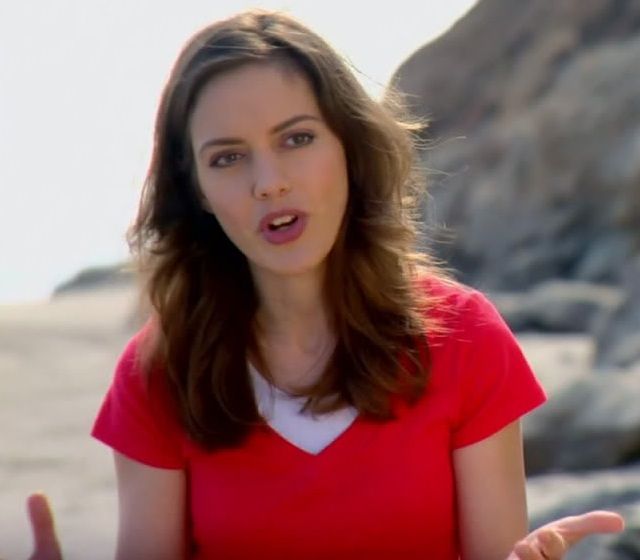
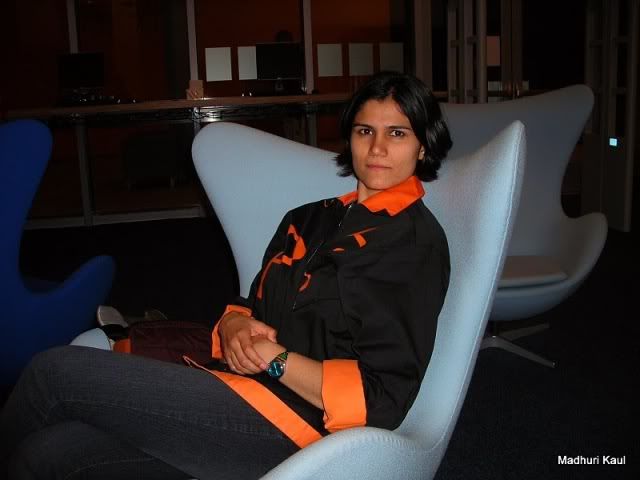
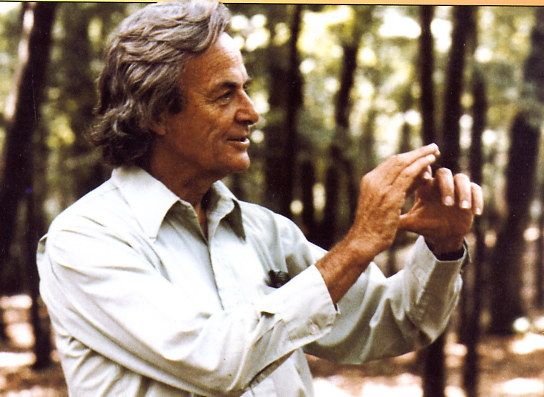
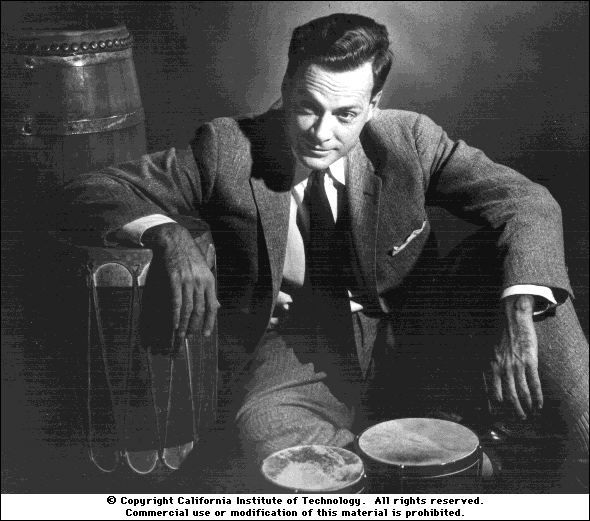
The Most Attractive Physicists - The Final Result!

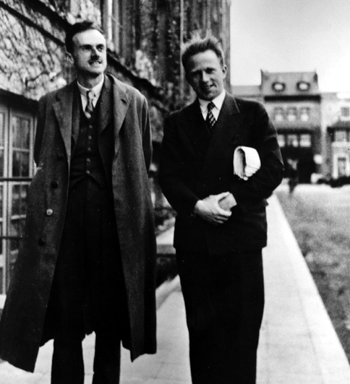
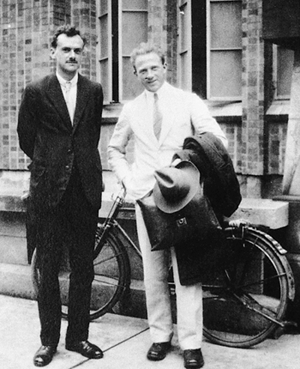
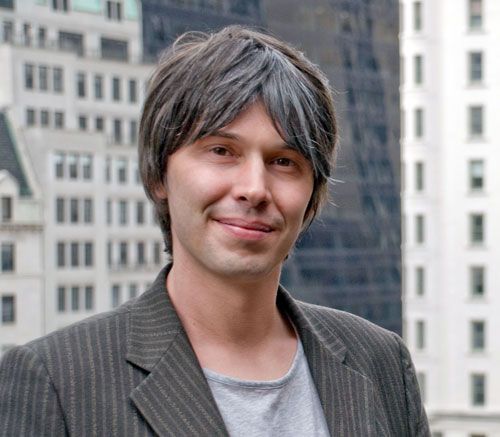
To say that this has been a rather wild ride would be an understatement. It kicked off with a rather huge bang when I started the poll for the most attractive female physicist. But then, it tapered down to barely a whimper by the time we got to the polling for the most attractive male physicist. Apparently, no one cared that doing such a poll for male physicists will "objectify" those people and ignore their accomplishments. Male physicists should be offended by that, but they weren't! :) The males also got significantly smaller number of votes than the female (194 versus 777). I wonder what that is saying? It is also interesting that the top 2 vote-getters for the male are both no longer with us. Humm......

Anyway, it was a very interesting experience, certainly for me. And so, thanks to your nominations and votes, we have the final results of our first poll on the Most Attractive Physicists.

FEMALE PHYSICISTS

1. Amy Mainzer (39% of the votes)


2. Sarah Kavassalis (19%)


3. Madhuri Kaul (14%)


MALE PHYSICISTS

1. Richard Feynman (49%)


2. Werner Heisenberg (45%)


3. Brian Cox (10%)


And there you are! These are the physicists you voted to be the most attractive. In fact, I would say that everyone on the nomination list have the enviable combination of both looks and brains. Mother Nature was certainly extra generous and kind to them!

Thanks to everyone who participated, either in providing the nominations, voting, or even in leaving me with hate comments and messages. They were all a lot of fun. I don't know if I'll do this again next year. Maybe I'll try to be even MORE offensive by making the poll even more shallow and superficial, such as finding the most hunky and muscular male physicist, or female physicist with the sexiest body. What do you think of that, huh?

:) :)

Zz.

Friday, October 08, 2010

The Accelerating Universe

This is a chapter of a book on the origin of dark energy. It is aimed at ".. general scientists..", which I think more to mean "physicists, astrophysicists, and astronomers". Still, it is a good review article on how the deduction of dark energy was arrived. For the general audience, it might be a bit too technical, but it provides a very necessary overview on the fact that this isn't something trivial to see.

Zz.

Thursday, October 07, 2010

Michael Turner's Review of "The Grand Design".

Ultimately, for me at least, I must prefer someone who understands the physics of what is being discussed to make an INFORMED review of a physics book, even if it is a pop-sci book. All the brouhaha surrounding Hawking/Mlodinow's book has been generated by people who could barely understand basic physics.

So it was with great interest that I read Michael Turner's review of this book in this week's Nature (Nature, v.467, p.657 (2010)). And as I suspected, he has a very interesting take on this that many non-physicists have missed.

Despite publicity to the contrary, The Grand Design does not disprove the existence of God. Science has not had much new to say about God since mathematician Pierre-Simon Laplace remarked to Napoleon that he had no need for “that hypothesis” when asked why he had neglected the deity in his treatise Mécanique céleste (Celestial Mechanics, 1799–1825). Rather, theoretical physicists Stephen Hawking and Leonard Mlodinow offer a brief but thrilling account of some of the boldest ideas in physics — including M-theory and the multiverse — and what these have to say about our existence and the nature of the Universe.
.
.
Thus, say Hawking and Mlodinow, there is no miracle — inflation plus M-theory equals multiverse. Our special Universe is a selection effect: all possibilities have been tried and we find ourselves in the only kind of inflationary patch that can support our existence. The grand design is unnecessary. One is reminded of Winston Churchill damning the United States with faint praise — they get it right after they have exhausted all the alternatives.

The multiverse is possibly the most important idea of our time, and may even be right, but it gives me a headache. Is it science if we cannot test it? The different patches are incommunicado, so we will never be able to observe them. The multiverse displaces rather than answers the question about choice and who chooses, and does not explain why there is something rather than nothing. Hawking and Mlodinow argue that negative gravitational potential energies allow something to arise from nothing — but that still begs the question of why there is space, time and M-theory at all.

Hawking has not ruled out the existence of God, or even the odd possibility that our creator is a physics student in an advanced civilization carrying out a routine lab experiment. He has strengthened Laplace's argument that, although some assembly process is required, no creator is necessary. It is well known that Hawking is no fan of religion, but it was the media who took “no necessity for God” to mean “no God”.
.
.
Yet The Grand Design reminds me, as I tell my students, that science doesn't do 'why' — it does 'how'. Physicist Richard Feynman discussed the dangers of 'doing why' in his 1964 Messenger Lectures. He warned that should we achieve the Ionian goal of finding all the laws, then “the philosophers who are always on the outside making stupid remarks will be able to close in”, trying to explain why those laws hold; and we won't be able “to push them away” by asking for testable predictions of those ideas. Time will tell if we are on to something big with the multiverse, or if we are becoming the philosophers that Feynman warned about.

There ya go! Isn't this similar to what I mentioned earlier?

Zz.

Wednesday, October 06, 2010

AIP Providing All Andre Geim and Konstantin Novoselov Papers For Free

Here's an announcement from the AIP. And just let me add that both AIP and APS frequently do this, i.e. providing free access to their publications when something like this occurs. This is extremely commendable.

AIP: Applied Physics Letters & Journal of Applied PhysicsAIP journals congratulate Andre Geim and Konstantin Novoselov on their Nobel Prize. For their groundbreaking work on the two-dimensional material graphene, American Institute of Physics (AIP) has made all articlespublished by these authors freely available. The list below includes four articles from Applied Physics Letters on the properties of graphene,as well as a Feature Article from Physics Today and several articles on their other research.

Visit <http://journals.aip.org/Nobel2010.html?track=APLJAPNP10> to readmore about this year?s prize and for links to other resources from AIP,including the twenty most highly cited AIP journal articles <http://journals.aip.org/Nobel2010.html?track=APLJAPNP10#6> on grapheneto date.We would like to add our congratulations to the winners, and look forward to publishing more exciting work on this topic as the unique properties of graphene are investigated to their full potential.Discover every article that AIP has published from these Nobel Laureates.

Graphene related:

Direct determination of the crystallographic orientation of graphene edges by atomic resolution imagingS. Neubeck, Y. M. You, Z. H. Ni, P. Blake, Z. X. Shen, A. K. Geim, and K. S. NovoselovAppl. Phys. Lett. 97, 053110 (2010)<http://link.aip.org/link/?APPLAB/97/053110/1?track=APLJAPNP10>

Quantum resistance metrology in grapheneA. J. M. Giesbers, G. Rietveld, E. Houtzager, U. Zeitler, R. Yang, K. S. Novoselov, A. K. Geim, and J. C. MaanAppl. Phys. Lett. 93, 222109 (2008)<http://link.aip.org/link/?APPLAB/93/222109/1?track=APLJAPNP10>

Raman fingerprint of charged impurities in grapheneC. Casiraghi, S. Pisana, K. S. Novoselov, A. K. Geim, and A. C. FerrariAppl. Phys. Lett. 91, 233108 (2007)<http://link.aip.org/link/?APPLAB/91/233108/1?track=APLJAPNP10>

Making graphene visibleP. Blake, E. W. Hill, A. H. Castro Neto, K. S. Novoselov, D. Jiang, R. Yang, T. J. Booth, and A. K. GeimAppl. Phys. Lett. 91, 063124 (2007)<http://link.aip.org/link/?APPLAB/91/063124/1?track=APLJAPNP10>

Graphene: Exploring Carbon FlatlandAndrey K. Geim and Allan H. MacDonaldPhys. Today 60, 35 (2007)<http://dx.doi.org/10.1063/1.2774096?track=APLJAPNP10>

Other research:

Submicron sensors of local electric field with single-electron resolution at room temperatureI. I. Barbolina, K. S. Novoselov, S. V. Morozov, S. V. Dubonos, M. Missous, A. O. Volkov, D. A. Christian, I. V. Grigorieva, and A. K. GeimAppl. Phys. Lett. 88, 013901 (2006)<http://link.aip.org/link/?APPLAB/88/013901/1?track=APLJAPNP10>

Spin-polarized electron tunneling across magnetic dielectricI. V. Shvets, A. N. Grigorenko, K. S. Novoselov, and D. J. MappsAppl. Phys. Lett. 86, 212501 (2005)<http://link.aip.org/link/?APPLAB/86/212501/1?track=APLJAPNP10>

Submicron probes for Hall magnetometry over the extended temperature range from helium to room temperatureK. S. Novoselov, S. V. Morozov, S. V. Dubonos, M. Missous, A. O. Volkov, D. A. Christian, and A. K. GeimJ. Appl. Phys. 93, 10053 (2003)<http://link.aip.org/link/?JAPIAU/93/10053/1?track=APLJAPNP10>

Diamagnetic levitation: Flying frogs and floating magnets (invited)M. D. Simon and A. K. GeimJ. Appl. Phys. 87, 6200 (2000)<http://link.aip.org/link/?JAPIAU/87/6200/1?track=APLJAPNP10>

Tales of Bitter Magnetism: Frog Eggs, Blood Cells, Pigeon Feet, Metal Shreds and a Sore HeadJames M. Valles, Jr, James M. Denegre, Kimberly L. Mowry, David R. Kelland, and Andrey GeimPhys. Today 51, 11 (1998)<http://dx.doi.org/10.1063/1.882469?track=APLJAPNP10>

Everyone's MagnetismAndrey GeimPhys. Today 51, 36 (1998)<http://dx.doi.org/10.1063/1.882437?track=APLJAPNP10>

Ballistic Hall micromagnetometryA. K. Geim, S. V. Dubonos, J. G. S. Lok, I. V. Grigorieva, J. C. Maan, L. Theil Hansen, and P. E. LindelofAppl. Phys. Lett. 71, 2379 (1997)<http://link.aip.org/link/?APPLAB/71/2379/1?track=APLJAPNP10>

Zero-dimensional states in macroscopic resonant tunneling devicesSakai, P. C. Main, P. H. Beton, N. La Scala, Jr., A. K. Geim, L. Eaves,and M. HeniniAppl. Phys. Lett. 64, 2563 (1994)<http://link.aip.org/link/?APPLAB/64/2563/1?track=APLJAPNP10>

Optical suppression of ionized impurity scattering in vertical hot-electron transportA. K. Geim, S. J. Bending, P. Gueret, and H. P. MeierAppl. Phys. Lett. 61, 3157 (1992)<http://link.aip.org/link/?APPLAB/61/3157/1?track=APLJAPNP10>


Zz.

This Year's Physics Nobel Prize Not A Surprise

I mentioned yesterday when the new broke on this year's winners of the Physics Nobel Prize that this was not a surprise at all. Someone at work asked me about that, and I told him that Geim and Novoselov were listed #3 in a recent poll in predicting this year's Nobel Prize winners. One could see this coming years ago.

The Nobel prize, and certainly in physics, is all about discovery (read its charter). So discovery of something as important and rich as graphene was a no-brainer to be awarded the Nobel Prize. It was just a matter of time. This is also why I predicted topological insulators to be in a similar situation a few years from now, if not sooner.

Zz.

Tuesday, October 05, 2010

Graphene Takes Center Stage at 2010 Nobel Prize

The Nobel Prize for 2010 goes to two Russian-born physicists who did groundbreaking work with graphene.

Russian-born scientists Andre Geim and Konstantin Novoselov shared the Nobel Prize in physics Tuesday for "groundbreaking experiments" with a new material expected to play a large role in electronics.

The Royal Swedish Academy of Sciences cited Geim and Novoselov, who are both linked to universities in Britain, for experiments with graphene, a flake of carbon that is only one atom thick.

This is not surprising at all. Graphene has taken condensed matter by storm, and promises to be the darling material for future electronics, besides having a boatload of new physics. So this year's prize is certainly deserving. It also makes me think that in a few years, those who were the first to be involved in topological insulators might also be up there for such a consideration.

It has been a while since the Physics Nobel prize goes to less than 3 people, hasn't it? For the past many years, it has got to the maximum compliment of 3 people.

Zz.

Monday, October 04, 2010

No Tech Tuesday? Not Possible!

I listen to 93.9 WLIT here in Chicago on the way to work each morning. Often, it is an enjoyable station with Valentine in the Morning show. But a couple of weeks ago, he started a campaign to get people to turn off "technology" for a day, because he saw people just getting too obsessed with their phones and facebook, etc. that they're not getting in touch with other people and doing other "human" things.

It appears that the campaign, "No Tech Tuesday", will be tomorrow, Oct. 4. They want people to stop using technology, i.e. no phones, computers, TV, etc. Now, I don't know about you, but I find it rather ironic that RADIO was not included. In other words, if we truly want to stop using technology, then listening to a radio should also be ruled out. Now, imagine how his bosses at the radio station would feel about this.

What is interesting in all of these amusing campaign is the fact that many people simply do not realize or ignorant on how much their lives DO depend on technology. If they have to get into a car or public transportation to go to work, they depend on technology. Let's see how many of you can walk to work on your No Tech Tuesday. And oh, did you also make your own clothes? No? What do you think made the fabrics of the clothes you wear? Should you use electricity for anything, that's technology there for you.

If you are annoyed by people using cell phones, or being addicted to facebook, etc., then you should campaign against such a thing, not "technology" in general. Just because one is swearing off those devices for a day doesn't mean one is swearing off all technology. That's like calling oneself a vegetarian just because one refuses to eat cows. These people on the "No Tech Tuesday" campaign are obviously ignorant of the fact that they are using technology all the time - they just don't realize it.

Zz.

Sunday, October 03, 2010

Is This Stunt Possible?

OK, this is way too enjoyable than it should be, but this is the sort of problems that I love to read about, not about the creation of the universe, for heaven's sake! :)

Wired Science is investigating, using simple mechanics, whether the stunt of wall climbing by these two people, is even possible.

You can follow the simple statics workings that was shown. In the end, using the premise that was presented, the force being applied by each person is just too much. But does that mean that this stunt can't be done, or that the picture is a fake? Does the fact that the guy on the right is actually pushing with his toes gave it away?

What do you think?

Zz.

Saturday, October 02, 2010

One Day Left To Vote On The Most Attractive Male Physicist

You have barely a day left to vote on the most attractive male physicist. At this moment, Heisenberg has taken over the lead from Feynman. But unlike the women's poll, there isn't a runaway leader at this point. Will Feynman stage a late comeback in the final hours? We shall see.

Zz.

Friday, October 01, 2010

Predicting This Year's Nobel Prize Winners In Physics

As is always at this time of the year, the guessing game begins on who will be awarded this year's Nobel Prize in Physics. A recent poll on what area and who will win it this year has been released. See if you agree.

Again, there's a shortage of women being considered for the nomination. I think Lene Hau and Deborah Jin are two physicists who have made significant advancement and discovery in physics who should also be in this select group of people.

However, as we ponder who will shine next week, we also pay tribute to another physics Nobel Laureate, Georges Charpak, who passed away on Sept. 29.

Dr. Charpak's chamber was a 4-inch square box of criss-crossed wires that measured, in fractions of a second, the trajectories of these exploded particles.

"My very modest contribution to physics has been in the art of weaving in space thin wires detecting the whisper of nearby flying charged particles produced in high-energy nuclear collisions," Dr. Charpak said at his Nobel Prize ceremony. "It is easy for computers to transform these whispers into a symphony understandable to physicists."

Dr. Charpak's design improved on other particle detectors, including the bubble and cloud chambers, which took photographs of the subatomic events and earned both of their inventors Nobel prizes.


Zz.

Thursday, September 30, 2010

Polling For The Most Attractive Male Physicists Is Not As Controversial

By this time last week, I was already getting hate mail and comments about the poll I created (using nominations that you submitted) to find the most attractive female physicist. I think that controversy also generated a lot of interest in the poll.

Yet, this week, there's barely a squeak when the same poll is done by male physicist. I don't hear people criticizing me for "objectifying" these people, and that this poll is wrong. Or maybe those have already been said in the women's poll and no one wants to repeat those here? As men, should we find it offensive that no one finds this poll offensive? :)

Whatever the case is, as a scientist, I find it fascinating and curious of the different nature of reaction. By all accounts, the men's poll is downright boring. Is it because as men, we really don't care if someone likes us not for our brains, but for our looks? Is it because we really don't have time to be bothered by something as trivial as this and that means nothing in the long run? Or is it because we really never had to struggle, like the women, to be seriously accepted for our accomplishments rather than our looks? I think that, more than anything, it is a case of self-reflectance on how we view and treat men and women who are in the same profession and having the same stature, but with varying numbers. One encounters significantly more men than women in physics.

Whatever the reason may be, I will say that I'm completely not surprised by the nature of the reaction. I anticipated being reamed for the women's poll (which was why I ran it first), and not creating a stir with the men's poll. But I did it anyway. :)

And speaking of the female physicist poll, by a huge margin, you voted for Amy Mainzer.

Zz.

Wednesday, September 29, 2010

The Feynman Variation

The BBC's "Discovery" radio show this time has Brian Cox paying tribute to Richard Feynman, who, by the way, happens to be leading the current poll of the most attractive male physicist. Brian Cox is trailing him far behind.

Zz.

Tuesday, September 28, 2010

Possible Observation of Hawking Radiation In A Lab?

{Don't miss casting your vote for the Most Attractive Male Physicist!}

This is rather fascinating, and certainly important if it is valid.

Using just an optical system, a group is reporting an observation of a Hawking radiation-like radiation.

To create the Hawking radiation, the scientists fired ultrashort (1-picosecond) laser pulses at transparent glass, which excited an RIP that exhibited an event horizon. Using a CCD camera, the researchers detected a peculiar kind of photon emission at a 90-degree angle to the glass. As the researchers explained, they arranged the experiment in a way to strongly suppress or eliminate other types of radiation, such as Cerenkov-like radiation, four wave mixing, self-phase modulation, Rayleigh scattering, and fluorescence.

Amazing what you can accomplish in a lab, isn't it? :)

Zz.

Monday, September 27, 2010

Frank Oppenheimer

Here's an interesting overview of a physicist that many of us don't know about. While Robert Oppenheimer is a well-known name, his younger brother, Frank Oppenheimer, has often been overlooked. So to me, I find it rather fascinating that someone decided to take a closer look at this physicist and what he has done.

As a teenager, Frank would devour letters Robert sent home from college at Harvard and, later, graduate school in Europe. They were full of news and gossip of the big characters of early 20th century physics, people such as Werner Heisenberg, Paul Dirac and JJ Thomson. Inspired, Frank decided to follow his brother into physics. After graduating from Johns Hopkins in 1933, Frank spent some time at labs in Cambridge and Florence, before moving to the California Institute for Technology for a PhD on artificially induced radiation.


It's always out of curiosity that I read biographies of physicists that I don't know of. Often, there are a few surprises in which I would realize that this person, who was unknown to me, actually has done something quite remarkable and important. In other words, this is person that one should know because if his or her important contribution. Unfortunately, I don't get that with reading this short blurb on Frank Oppenheimer. Sure, he worked with his brother on the Manhattan Project. We don't quite get exactly what his contributions were. But other than that, there's nothing significant about his story that convey the idea that this person has done something that I would consider to be significant. His "eccentricity" or creativity seems to be the main story here of what possibly be a good-enough reason to review his life history, which is fine if that's the purpose. However, after reading Dirac's biography, it is hard to top that in the eccentricity scale.

Zz.